

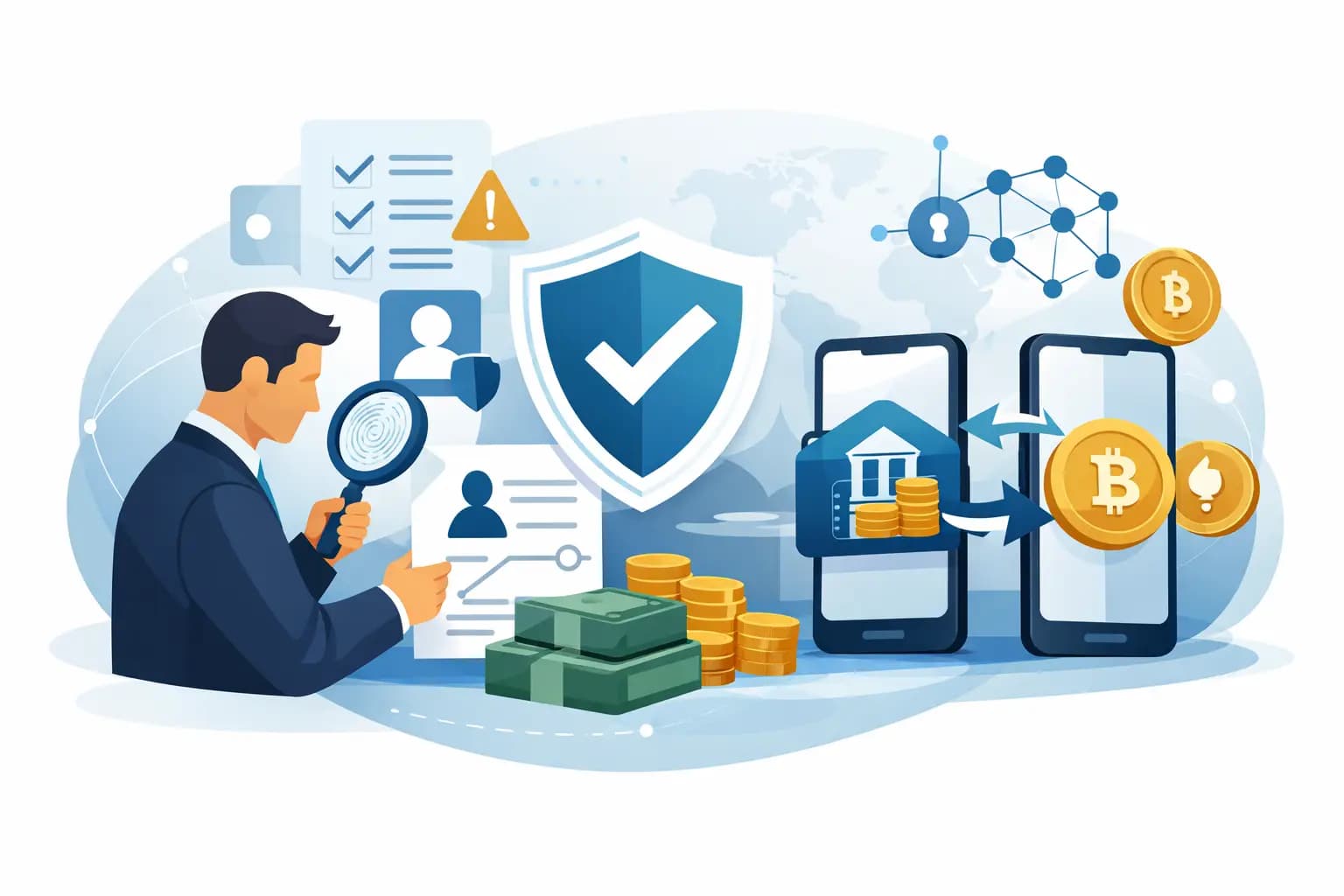
A wallet can look fine right up until the moment your transfer gets delayed, flagged, or refused by the next service in the chain. That is why an aml check before crypto transfer is not just a compliance step for institutions. For active self-custody users, it is a practical way to avoid sending funds into friction you could have seen earlier.
If you move assets between exchanges, DeFi tools, OTC counterparties, private wallets, or client addresses, risk does not start when a platform asks questions. It starts at the wallet level. A receiving address may already carry exposure to sanctioned entities, darknet activity, scams, mixers, stolen funds, or other high-risk patterns. Once you send into that path, reversing the problem is rarely simple.
Why an AML check before crypto transfer matters
Crypto moves fast, but risk scoring moves with it. Many platforms now screen deposits and withdrawals automatically, and they do not all use the same thresholds. A wallet that one service accepts may trigger review somewhere else. That creates a real operational problem for traders, agencies, payroll senders, and anyone routing funds across multiple endpoints.
An AML check before crypto transfer gives you a preview of the wallet's risk profile before you commit the transaction. That matters in a few common cases. You may be sending profits to a fresh exchange deposit address, paying a contractor who rotates wallets often, moving stablecoins between your own wallets after interacting with a protocol, or preparing funds for a swap route where timing matters. In each case, wallet history can affect what happens next.
The main benefit is not theoretical safety. It is fewer surprises. If a wallet shows elevated exposure, you can stop, investigate, and choose a different route before funds get stuck in review.
What an AML wallet check actually tells you
A good wallet screening result is not a simple yes or no. It gives you context on where risk may come from and how severe it appears. That usually includes an overall risk score, categorized exposure, and transaction history signals tied to known entities or flagged behavior.
High-risk exposure can come from direct interaction or indirect proximity. That distinction matters. A wallet with direct links to illicit sources is very different from a wallet that touched an intermediary several hops away. Some users overreact to any risk score at all, while others ignore warning signs because the wallet "is not fully blocked." Neither approach is especially useful.
What matters is the pattern. If the screening shows concentrated exposure to stolen funds, fraud, sanctions, or mixing services, that is a stronger warning than a low percentage of distant contact with a high-risk cluster. The practical question is simple: would this wallet create avoidable friction at your next destination?
When you should run an AML check before crypto transfer
You do not need to screen every address with the same intensity. But there are moments where checking first is the smart move.
The first is when you are dealing with a wallet you did not generate yourself. Counterparty risk is higher whenever someone else supplies the address. This applies to OTC-style deals, freelance payments, treasury operations, and direct settlements.
The second is when you are moving larger value than usual. A small transfer might pass with no issue where a larger one triggers manual review. If the amount matters to your trading window or business operation, a check is cheap insurance against delay.
The third is after funds have interacted with services that tend to draw extra scrutiny. Privacy-preserving tools, rapid hop patterns, high-volume DEX activity, and certain bridge routes can all influence how downstream services interpret the wallet path. That does not automatically make the funds unusable. It does mean visibility matters more.
The fourth is before sending to an exchange or payment processor with stricter controls. If the destination is likely to review source-of-funds patterns, pre-screening helps you decide whether to use that route at all.
How to use the result without overcomplicating it
The point of screening is action, not analysis for its own sake. Once you have a result, your next move usually falls into one of three paths.
If the risk is low and the wallet history looks ordinary, proceed. If the result is moderate, pause and inspect the exposure categories. Sometimes the score comes from old activity, indirect links, or broad heuristics that do not create a real issue for your destination. If the risk is high, especially with direct exposure to known illicit categories, do not treat that as a minor warning. Ask for another address, route differently, or avoid the transfer.
This is where operational clarity matters. A screening tool should help you make a decision quickly, not bury the answer under abstract labels. For active users, the value is speed with context.
AML check before crypto transfer for self-custody users
There is a common assumption that AML screening only matters when a centralized platform gets involved. In practice, self-custody users often benefit more from early checks because they carry more routing responsibility themselves.
If you manage your own wallets, no one is quietly filtering risk for you before you click send. You are choosing the counterparty wallet, the chain, the timing, and sometimes the swap path that follows. One bad destination can create a chain of delays across services you planned to use afterward.
That is especially true for users who move between public and more private transaction flows. Privacy and control are valid goals, but they do not eliminate downstream screening by exchanges, gateways, and service providers. The trade-off is straightforward: more self-direction gives you more flexibility, and also more responsibility to check what you are sending to and from.
What an AML check cannot do
Wallet screening is useful, but it is not magic. It cannot guarantee that a transfer will never be questioned. Platforms use different vendors, different thresholds, and different internal review policies. A wallet that appears acceptable today may be rescored later as new intelligence is added.
It also cannot fix poor fund hygiene after the fact. If your source wallet has problematic exposure, checking the destination wallet does not erase that history. Screening is one part of a better transaction workflow, not a substitute for judgment.
There is also a timing factor. Blockchain analytics data updates constantly, but not every service refreshes at the same speed. For high-stakes transfers, it is worth remembering that results are a decision aid, not a legal clearance certificate.
Building a faster transfer workflow
For most crypto-native users, the best approach is simple. Screen first when the counterparty is unfamiliar, when the amount is meaningful, or when the next step depends on clean wallet history. Then move only when the result matches your risk tolerance and your destination's likely standards.
This is where a utility layer matters more than a pile of disconnected tools. If you are already swapping assets, screening wallets, managing transaction flow, and optimizing execution costs across networks, friction builds fast when every step lives in a separate interface. A platform like 2AML is built around that operational reality - visibility, routing, and task completion in one place rather than scattered workflows that slow you down.
The real cost of skipping the check
Most users skip screening because they want speed. Ironically, that is often what they lose. A blocked deposit, compliance review, frozen payout window, or failed counterparty transfer costs more time than a quick pre-check ever would.
The more often you move funds, the more this becomes a process issue rather than a one-off precaution. You are not just avoiding bad addresses. You are reducing uncertainty before it enters your workflow.
Crypto gives you control over movement. An AML check helps you keep control over consequences. Before you send, make sure the wallet on the other side is worth trusting with the next step.