

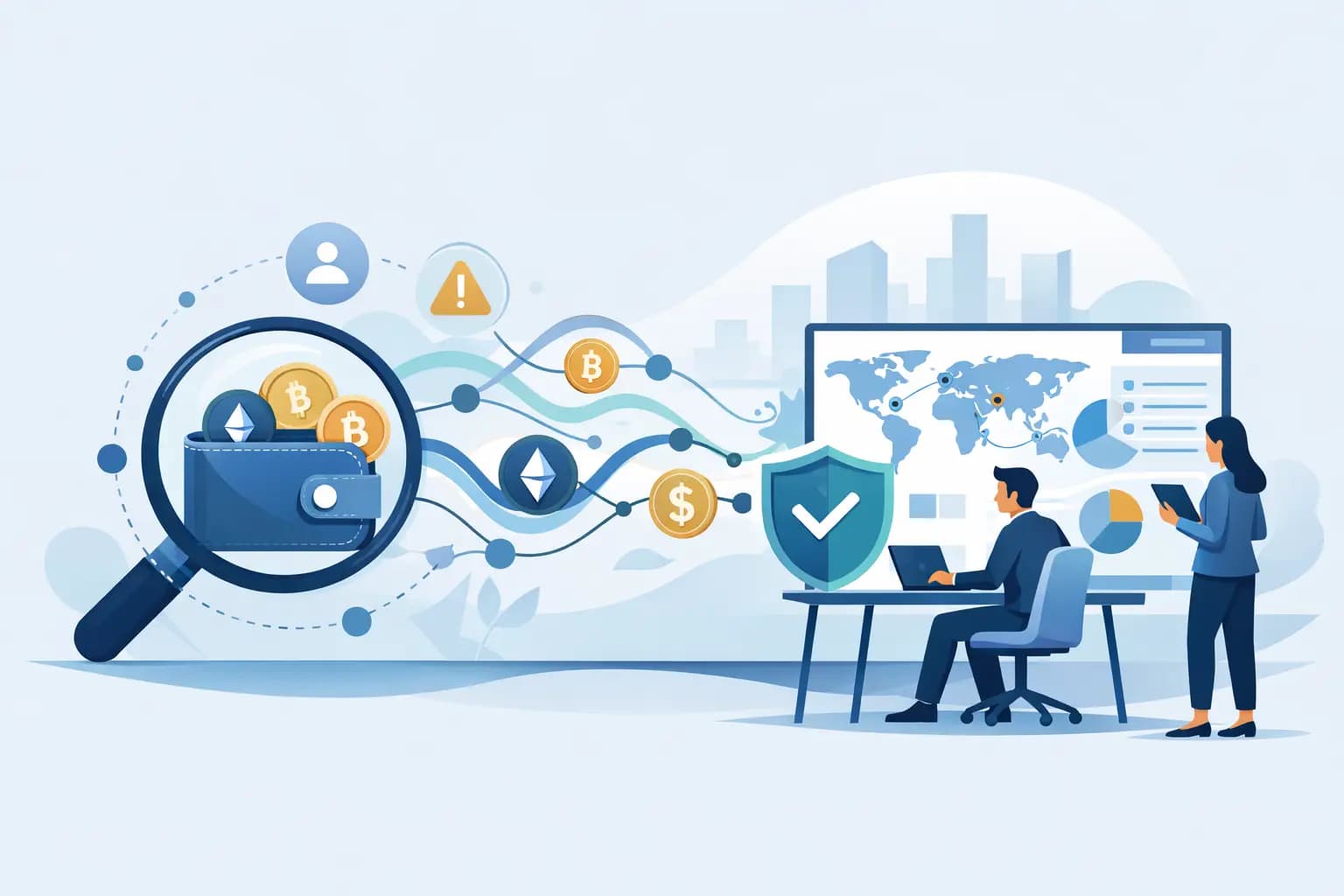
A wallet can look clean right up until a swap stalls, an exchange asks questions, or a payout gets frozen for review. That is where aml crypto screening stops being a compliance buzzword and becomes an operational filter. If you move funds across wallets, chains, and counterparties, screening is less about policy language and more about avoiding bad inputs before they disrupt the next step.
For active crypto users, the problem is rarely theory. It is timing. You are swapping between assets, consolidating balances, sending to a service provider, receiving from clients, or moving stablecoins through TRON to keep fees low. In those moments, one risky wallet in the path can create friction that shows up later, when the funds hit a venue with tighter controls. Screening early gives you a read on exposure before execution, not after.
What aml crypto screening actually checks
At a practical level, aml crypto screening evaluates wallet addresses and transaction history for risk signals tied to sanctions, illicit finance patterns, darknet exposure, scams, hacks, mixers, and other flagged categories. The goal is not to declare a wallet permanently good or bad. The goal is to estimate whether interacting with it could create compliance or settlement problems downstream.
That distinction matters. Blockchain activity is contextual. A wallet that touched a high-risk source months ago may not carry the same profile as a wallet actively receiving from sanctioned entities or recent exploit flows. Good screening tools do not just assign a color and stop there. They surface categories, exposure levels, recency, and sometimes the path length between a wallet and known risk sources.
For a crypto-native user, the value is simple. Before funds move, you want a fast read on whether an address could trigger issues with an exchange deposit, OTC counterparty, payment settlement, treasury transfer, or internal risk controls. Screening helps you decide whether to proceed, ask more questions, route differently, or avoid the interaction entirely.
Why wallet screening matters before the transaction
A common mistake is treating AML review as something that happens after funds arrive somewhere important. By then, your options are limited. If an exchange flags a deposit or a business partner pauses a transfer, you are already spending time on explanations, source-of-funds checks, or support tickets.
Running aml crypto screening before a swap, payout, or inbound receipt changes the sequence. Instead of reacting to a hold, you can evaluate the wallet first and decide whether the transaction belongs in your normal workflow. That is especially useful for users who deal with high transaction volume, rotating counterparties, or quick-turn trading setups where delays cost money.
It also helps with internal clarity. If you are operating a small digital asset business, paying contractors in crypto, or receiving funds from multiple clients, screening creates a basic checkpoint. Not perfect certainty, but a repeatable control. You can review an address, document the result, and move forward with better visibility.
AML crypto screening is not the same as full compliance
This is where expectations need to stay grounded. AML crypto screening is a tactical risk check, not a complete compliance program. It can tell you that a wallet has exposure to a scam category, recent sanctions connections, or indirect mixer activity. It cannot tell you the human story behind every transaction, nor can it replace legal advice, enhanced due diligence, or jurisdiction-specific obligations.
For individual users, that means screening is best used as a decision aid. For businesses, it is one layer in a broader process. You may still need manual review for high-value transfers, repeat counterparties, or cases where a wallet score conflicts with what you know about the customer relationship.
There is also a false-confidence problem in this space. Some users treat a low-risk result as a guarantee that nothing can go wrong later. That is not how blockchain risk works. Different providers use different data sets, labels, and thresholds. An address with low apparent risk today can pick up new exposure tomorrow. Screening is strongest when it is built into the flow, not treated as a one-time certificate.
What a useful screening workflow looks like
The best workflows are fast enough to use every time and clear enough that you do not skip them when volume picks up. In practice, that means screening fits before the high-friction point, not after.
If you receive funds from a new wallet, check the address before treating the balance as fully usable. If you are about to send to a third-party service, screen the destination to reduce the chance of interacting with a flagged counterparty. If you are swapping assets before sending onward, screen both the source and destination side when the transaction is material enough to justify it.
The workflow should also preserve visibility. A plain pass-fail label is often not enough. You want to see what is driving the risk rating, whether the exposure is direct or indirect, and how recent the activity is. A wallet with a small indirect connection five hops away is a different operational case than a wallet directly funded by a known exploit address last week.
This is where integrated tooling has an advantage over fragmented tabs and separate vendors. When the screening step sits close to your transaction flow, it is more likely to happen consistently. You spend less time copying addresses between services and less time losing context between risk review and execution.
When screening changes the decision
Not every flagged result means stop immediately. Sometimes it means slow down and verify. Sometimes it means reduce transaction size, ask for a different wallet, or avoid routing funds into a venue likely to react aggressively. The right response depends on the transaction value, the type of risk, and what happens next in the asset flow.
A few examples make this clearer. If you are getting paid by a new client in stablecoins and the sending wallet shows sanctions exposure, that is usually a hard stop. If the wallet shows older, low-level indirect exposure to a gambling service, your response may depend on your own risk tolerance and where the funds are headed next. If you are moving treasury funds between your own wallets, even a moderate flag deserves investigation because internal transfers can carry contamination forward into later deposits.
The point is not to build fear around every score. The point is to make better routing decisions while you still control the next move.
The trade-off between speed and depth
Crypto users value speed for good reason. Markets move, counterparties wait, and on-chain opportunities do not stay open long. But the fastest possible screening result is not always the most useful one. A stripped-down output may help with quick checks, while higher-stakes transfers deserve deeper detail.
That trade-off is why interface design matters. You want a process that starts in seconds but still gives enough information to act. For low-value or routine flows, a quick wallet risk check may be enough. For larger settlements or business use, you may want category breakdowns, transaction context, and a record of the result.
Operationally, the best setup is the one you will actually use. A perfect system that takes too long gets skipped. A fast system with no context creates blind spots. The middle ground is a screening layer that is easy to access, easy to understand, and close to the transaction tools you already use.
Choosing an aml crypto screening tool
If you are evaluating providers, focus less on marketing language and more on workflow fit. Can you screen a wallet without unnecessary delays? Do you get readable risk categories instead of a vague label? Is the output useful for both one-off checks and repeat operational use? Can you keep transaction visibility without moving across disconnected tools?
For many users, convenience is not just comfort. It directly affects whether screening happens before each meaningful transaction. A platform like 2AML is built around that operational reality, with wallet AML checks sitting alongside other utility functions that active users already need. That kind of setup reduces tab switching and keeps risk review closer to execution.
You should also think about your own pattern of use. A freelance earner receiving periodic client payments needs something different from an arbitrage user moving across venues daily. A small team paying vendors from a treasury wallet has different needs from a solo trader checking a destination address before a one-time transfer. The right tool is the one that matches your transaction frequency, speed requirements, and tolerance for manual review.
Where false positives and gray areas show up
Not every risk label carries the same operational weight. Some wallets get flagged because of indirect exposure several steps away. Others are linked to services that sit in gray regulatory zones rather than clearly illicit activity. If you treat every alert the same way, you either create unnecessary friction or miss the alerts that matter most.
This is why nuance matters. Recency, exposure path, transaction volume, and category type all affect how seriously a result should shape your next move. Screening works best when it informs judgment rather than replacing it.
For active users, that means keeping one practical question in mind: if this address becomes part of my flow, where could it cause problems next? That framing keeps the process grounded in actual operations instead of abstract scoring.
The cleanest transaction flow is usually the one that had the fewest surprises at the start. Run the check before the send, before the swap, before the settlement, and you keep more control over what happens after.