

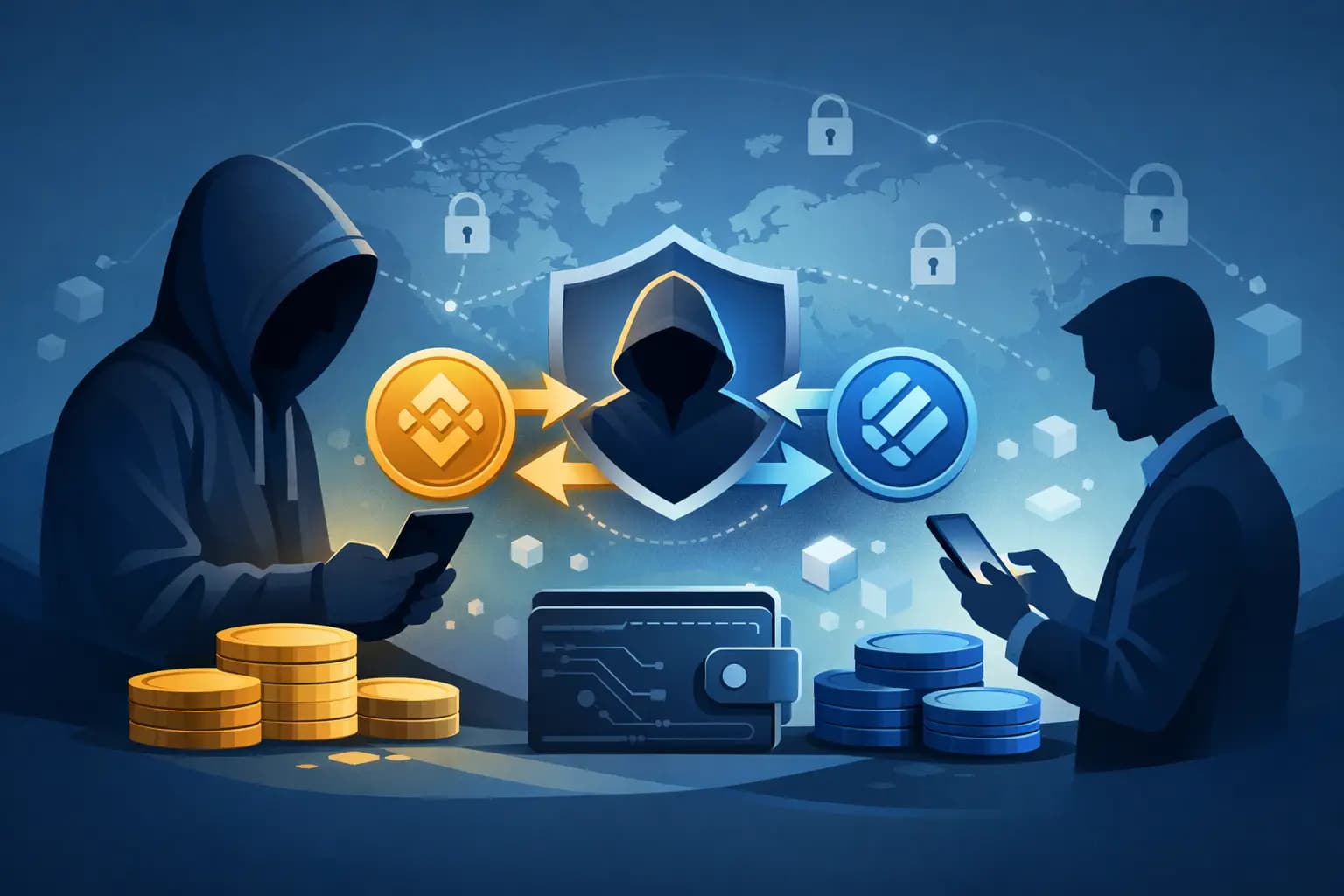
Most crypto users asking about anonymous crypto transfer options are not chasing mystery. They are trying to avoid unnecessary exposure. Maybe you do not want every wallet hop tied to your main address. Maybe you are paying a contractor, moving treasury between wallets, or rotating funds across networks without leaving a clean public trail that maps your activity in one view.
That goal is reasonable. But the phrase “anonymous” needs precision. On-chain transfers are usually not anonymous in the absolute sense. They are better described as less linkable, less visible, or more private depending on the method, the chain, and your own mistakes. The real question is not whether a transfer is invisible. It is which option gives you the right balance of privacy, speed, cost, and control.
What anonymous crypto transfer options actually mean
Most blockchains are transparent by design. Wallet addresses are public, transaction histories are public, and analytics tools are good at clustering activity. So when people compare anonymous crypto transfer options, they are usually comparing methods that reduce direct wallet-to-wallet traceability rather than eliminate it.
That distinction matters because each method protects a different layer. Some tools obscure transaction paths. Some break the link between source and destination through swaps or intermediate routing. Some rely on privacy-focused chains with stronger built-in protections. Others simply reduce data leakage by avoiding account creation, reusing addresses less often, or separating operational wallets.
If you expect perfect invisibility from a basic swap or a single transfer hop, you will overestimate what the tool can do. If you treat privacy as a workflow, your results are usually much better.
The main anonymous crypto transfer options
Privacy coins
Privacy-focused assets like Monero are the clearest example of stronger on-chain privacy. Their transaction design hides more information than standard transparent chains, which makes address tracing far harder.
The upside is obvious. If privacy is the priority, dedicated privacy networks are built for it. The downside is practical. Liquidity can vary, exchange support is uneven, and some services or counterparties will not accept privacy coins at all. For users who need broad compatibility, privacy coins can be powerful but inconvenient.
Swap-and-send workflows
A common approach is to swap one asset into another, route across a different network, and then send onward from a fresh wallet. This does not make the movement untraceable, but it can reduce direct wallet continuity and make the transaction path less simple to follow.
This method is popular because it fits how active users already operate. You keep self-custody, move quickly, and avoid relying on a single visible address trail. The trade-off is execution complexity. Every extra step creates fee exposure, timing risk, and room for operational mistakes. If the workflow is fragmented across different tools, you also lose visibility.
Private-send transaction flows
Some services are built specifically to support more discreet transfer routing without forcing users into a full manual process. The value here is not magic anonymity. It is cleaner execution, separation between stages, and better control over how funds move from one point to another.
This can be useful for users who want a more private transfer pattern but still care about speed and transaction status. In practice, workflow clarity matters almost as much as the privacy method itself. If you cannot see where a transfer sits, privacy starts to feel like uncertainty.
Cross-chain routing
Moving funds across networks can also reduce straightforward address mapping, especially when combined with fresh destination wallets and asset changes. A user might start on one chain, convert, move through another network, and exit into a new address structure.
This is effective only if done carefully. Cross-chain movement creates separation, but it also creates records at each stage. If those stages are easy to correlate by timing, amount, or wallet behavior, the privacy benefit shrinks fast.
The trade-offs most users ignore
Privacy in crypto is rarely a single-product decision. It is an operational decision. That means the strongest option on paper may not be the best option for your actual use case.
If you need fast settlement, a privacy coin conversion route may add too much friction. If you need broad token support, a specialized privacy network may be a poor fit. If you need low fees, multiple swaps and bridges can get expensive. And if you need confidence that the receiving wallet will not create downstream problems, privacy alone does not solve that.
There is also a compliance reality. Many users want discretion, not risk. They are not trying to bypass internal treasury controls or receive problematic funds. They want to move assets without broadcasting their full wallet graph to every counterparty. That is a different use case than “hide everything at any cost,” and it usually calls for a more balanced workflow.
How to choose the right option for your use case
Start with the reason you want privacy. If your main concern is separating personal and business wallet activity, disciplined wallet hygiene and routed transfers may be enough. If your concern is public chain analytics linking a large balance to your identity, using fresh wallets and more private transfer flows becomes more relevant. If your concern is maximum on-chain privacy, then privacy-first assets deserve a closer look.
Then look at execution constraints. How fast do the funds need to arrive? Do you need the recipient to accept a specific asset? Are you optimizing for low fees, fewer steps, or easier tracking? Most users end up choosing a middle path. They want better privacy than a direct transfer, but they also want something practical enough to use repeatedly.
That is where a utility-layer approach helps. Instead of manually piecing together swaps, routing, and wallet checks from separate tools, users can move faster when transaction flows are organized in one place. For example, 2AML combines swaps, private-send flows, wallet AML screening, and TRON energy tools into a single operational stack. For active users, that matters because privacy is only useful if the transfer also stays efficient and visible while in progress.
Operational habits that matter more than the tool
Many failed privacy attempts come from user behavior, not bad infrastructure. Reusing addresses is the obvious problem. Sending from a known wallet to a fresh wallet and then back to the known wallet later defeats the point. Amount correlation is another issue. If the exact same amount appears in sequence across wallets and chains, the trail stays easier to map.
Timing matters too. Immediate back-to-back movements create clean clues. In some cases, spacing transactions and varying patterns can reduce easy linkage. Memo fields, reused exchange deposit addresses, and mixing personal funds with business flows can all leak context as well.
If you are serious about privacy, think in terms of compartmentalization. Separate wallets by purpose. Avoid joining identifiable activity with private transfer activity. Use fresh receiving addresses. And before receiving funds into an operational wallet, consider screening the address path so you are not trading one problem for another.
Why wallet screening still belongs in a privacy workflow
Some users assume privacy and risk review pull in opposite directions. They do not. Privacy is about reducing unnecessary exposure. Risk screening is about reducing avoidable problems.
If you receive funds through multiple hops, swaps, or counterparties, you still need to know whether a wallet carries sanctions exposure, hack links, or other red flags. That is especially true for freelancers, OTC-style operators, and small crypto businesses that cannot afford frozen balances or rejected counterparties later. A transfer can be more private and still be operationally clean.
This is one of the more overlooked parts of anonymous crypto transfer options. The best workflow is not just hard to trace. It is also clear, fast, and usable in the real market.
A practical standard for better transfer privacy
If your goal is absolute anonymity, you will run into trade-offs fast. Limited liquidity, extra friction, and acceptance issues are common. If your goal is practical privacy, the bar is different. You want fewer direct links between wallets, less public visibility into your transaction graph, and enough transparency during execution that you know where your funds are.
That usually points to a combination of methods rather than a single silver bullet. Fresh wallets, selective cross-chain routing, asset swaps, private-send workflows, and wallet screening can work well together when the process is organized. The closer your setup gets to a repeatable workflow, the fewer mistakes you make under pressure.
The best anonymous crypto transfer options are the ones you can execute cleanly, track confidently, and repeat without turning every transfer into a manual project. Better privacy starts with better operations.