

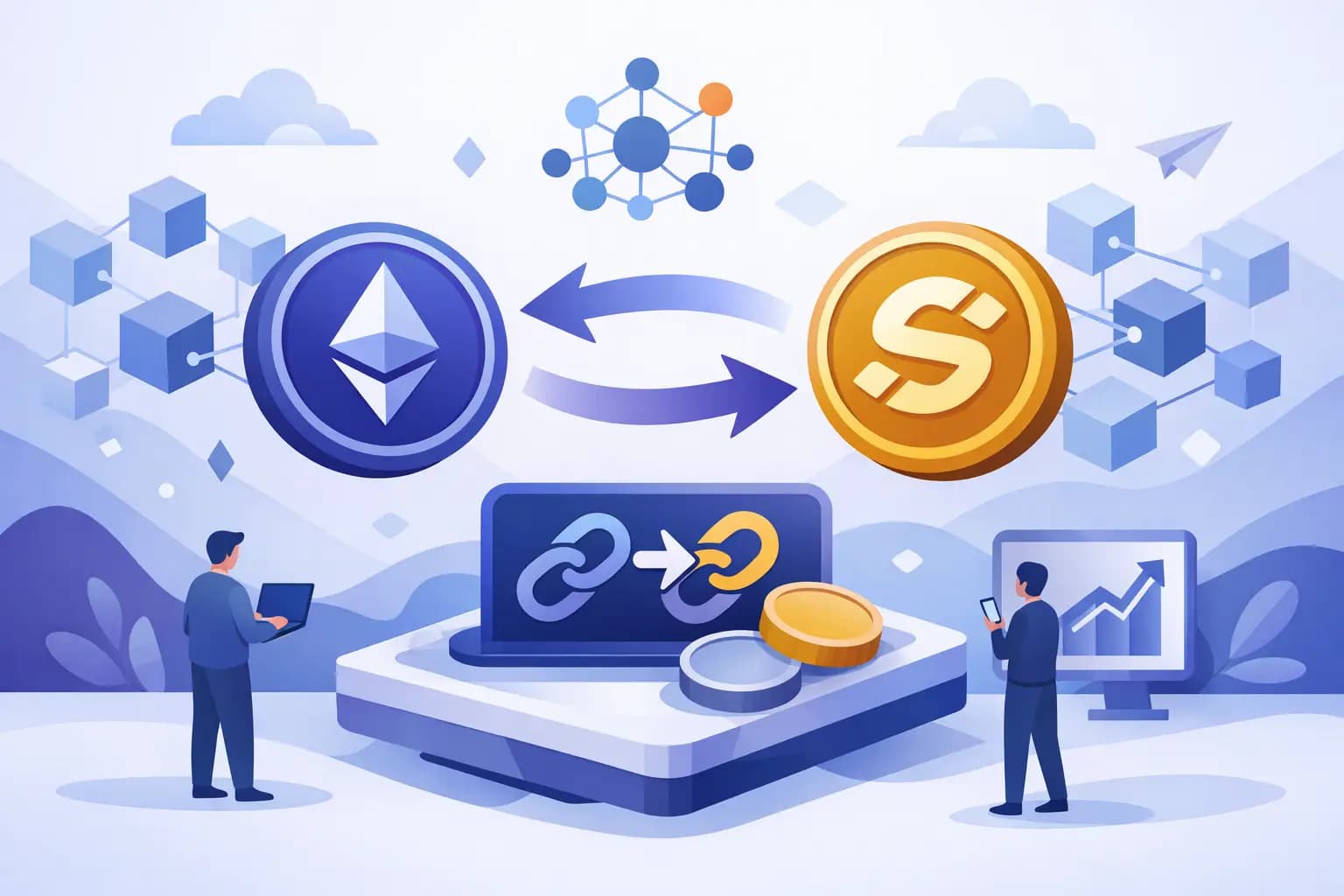
A swap looks fast right up until funds leave one network and fail to appear on the next. That gap is where a real cross chain swap service review matters - not at the marketing layer, but at the point where routing, fees, timing, and status visibility decide whether the transaction feels controlled or risky.
If you move assets across chains often, you already know the headline promise is easy. Send one coin on one network, receive another on a different network, keep moving. The harder part is judging which service actually handles the operational details well. For active users, the difference usually comes down to four things: how the route is built, how transparent the process is, how much friction sits between quote and execution, and what happens when conditions change mid-transaction.
What a cross chain swap service review should actually measure
A useful review starts with execution, not branding. Most services can advertise broad asset support and competitive rates. Fewer can show clear transaction states, stable routing logic, and predictable handoffs between networks. If a platform cannot make the process legible, speed claims do not mean much.
The first thing to assess is route quality. Some services rely on a single liquidity or exchange partner. Others aggregate multiple providers and choose the best available path at the moment you initiate the swap. Aggregation can improve pricing and completion odds, but it also adds another layer that needs to be handled well. A better route is not just the cheapest quote. It is the quote that can actually settle with minimal slippage, reasonable timing, and clear confirmation steps.
The second factor is status visibility. A lot of user frustration comes from simple uncertainty. Did the deposit arrive? Has the provider processed it? Is the payout waiting on destination chain confirmation? Strong services make each stage visible in real time. Weak ones leave users checking explorers and guessing.
The third factor is onboarding friction. For routine swaps, many users do not want account creation, lengthy verification, or extra steps unless risk controls require it. That does not mean compliance is irrelevant. It means the service should match friction to the task. For standard cross-chain execution, the best experience is usually direct, fast, and non-custodial in feel.
Cross chain swap service review criteria that matter most
Speed is the first thing most users notice, but raw speed is not the full story. There is quoted speed, and then there is effective speed. Effective speed includes wallet confirmation time, partner processing time, destination chain conditions, and whether the service updates the user clearly while those events happen.
A platform that completes in twelve minutes with reliable tracking is often better than one that promises five minutes but gives no useful status once funds are sent. The market is volatile enough already. Operational silence makes every normal delay feel like a failure.
Fees deserve a closer read than most reviews give them. Users often compare the displayed exchange rate and stop there. In practice, the final cost includes network fees, spread, potential partner markup, and sometimes asset-specific handling costs. The key question is not whether a service is the cheapest in all cases. It is whether the quote is understandable and whether the delivered amount lands close to expectation.
Asset and network coverage also need context. A wide list looks good on paper, but depth matters more than count. If a service supports many chains but delivers inconsistent routing quality across less common pairs, the coverage is less useful than it appears. Frequent movers should test the exact pairs they use most, especially when swapping between major ecosystems and faster, lower-cost networks.
Reliability is where mature services separate themselves. That includes partner selection, route fallback logic, and how exceptions are handled. Crypto users can tolerate delay better than confusion. If a route becomes unavailable or the market moves sharply, the service should show what changed and what the next step is. A clean interface does not solve a failed route by itself, but it can prevent the user from losing track of what is happening.
Where many swap services fall short
The biggest weakness in this category is fragmentation behind the interface. Some services look simple on the front end but depend on a chain of third parties that the user never sees. When something slows down, support becomes vague because the service is really relaying status from somewhere else.
That does not automatically make an aggregator weak. In fact, aggregation can be a strength when it is handled as infrastructure rather than as a thin wrapper. The difference is whether the platform gives users enough visibility into the transaction lifecycle and enough confidence that routing decisions are being made for execution quality, not just for convenience.
Another common issue is poor quote discipline. A service may advertise a favorable rate before deposit, then rely on broad floating-rate language to justify a lower-than-expected payout. Floating rates are not inherently a problem. In volatile markets, they are often necessary. The issue is whether the service communicates that clearly and structures the transaction so users understand the trade-off before sending funds.
Support is another weak point. For high-frequency or time-sensitive users, support is not only about solving edge cases. It is about reducing operational downtime. Even when a swap is mostly automated, users still need credible assistance when a memo is missed, a network slows, or a receiving address format causes rejection.
What strong cross-chain infrastructure looks like
The best services feel less like a crypto storefront and more like an execution layer. They reduce clicks, show route progress, and keep the user in control without forcing them to manage every detail manually. That is especially valuable for users who move funds often and care more about completion confidence than flashy design.
A good example of this approach is a platform that combines swap execution with adjacent utility functions users already need, such as wallet risk screening or network cost optimization. That matters because crypto operations rarely happen in isolation. A user swapping assets may also want to check wallet exposure before receiving funds or reduce transaction costs on a network like TRON before moving stablecoins. When those functions sit in one interface, the workflow gets tighter and decision time drops.
This is where a utility-layer model has a practical advantage. Instead of acting like a custodian, the platform focuses on routing, transaction visibility, and orchestration. For self-custody users, that is usually the right balance. They want execution help, not account-heavy gatekeeping.
How to evaluate a service before sending size
Start with a small live transaction on a pair you use regularly. Test during a normal market window, not during extreme volatility, so you can judge the base experience. Look at how long the quote takes, how clear the expected receive amount is, and whether each status update appears without delay.
Then test under slightly less ideal conditions. Try a pair that crosses two different network environments or one with less common payout demand. This tells you whether the service works well only on popular routes or whether the execution quality is broader.
Pay attention to how the interface handles errors and waiting periods. Good systems explain what the service is waiting for. Bad systems just show a spinner and generic language. For frequent users, that distinction saves time because it tells you whether to keep waiting, contact support, or investigate on-chain.
If privacy and low-friction access matter to you, check whether the service lets you initiate standard transactions without unnecessary account setup. If you run business workflows or repeated screening needs, separate account-based tools can still make sense for those specific functions. The point is alignment. The process should fit the job.
The trade-offs behind every cross chain swap service review
No service wins every comparison. A platform may offer excellent visibility but slightly higher effective costs on certain pairs. Another may have aggressive pricing but weaker support during exceptions. Some are better for quick retail-sized conversions, while others are more dependable for repeat operational use.
It also depends on what you value most. Arbitrage users often prioritize route speed and quote competitiveness. Freelancers paid in crypto may care more about predictability and simple wallet-to-wallet execution. Small digital asset businesses may weigh screening tools and workflow consolidation more heavily than a one-time best rate.
That is why the best review is not a generic ranking. It is a fit assessment. If a service helps you start quickly, track every step, and finish transactions with fewer unknowns, it is doing the job most users actually need done.
For active crypto users, the strongest choice is usually the service that removes operational drag without taking control away from you. When a platform can route effectively, keep the process visible, and support adjacent tasks in the same workflow, you spend less time managing transaction friction and more time moving capital where it needs to go.