

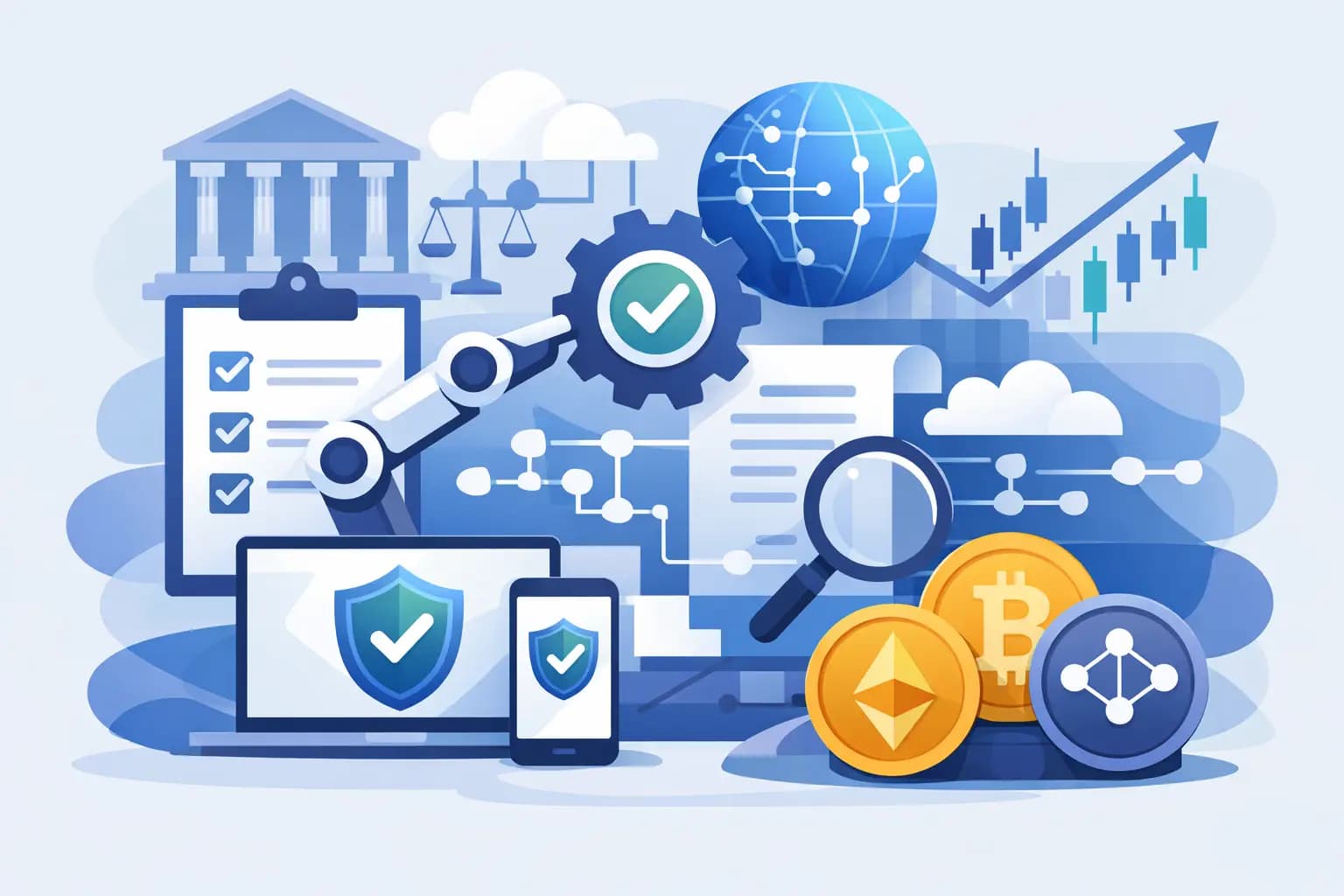
Manual review breaks first at the exact moment volume starts to matter. A few more wallet checks, a few more cross-chain transfers, a few more counterparties, and suddenly the old process turns into delays, guesswork, and inconsistent decisions. That is why crypto compliance automation trends now matter far beyond large exchanges. They are becoming operational infrastructure for traders, payment flows, treasury teams, and any business moving digital assets at speed.
This shift is not just about doing compliance faster. It is about reducing friction without losing visibility. For crypto-native users, that balance matters. Nobody wants a workflow that feels like a bank portal from 2012, but nobody wants to route funds blindly either. The market is moving toward systems that can screen, score, route, and flag activity in real time while keeping the user in control.
The crypto compliance automation trends changing daily operations
The most visible trend is the move from periodic review to event-based monitoring. Older compliance workflows were built around batches - screen the address, log the result, move on. That model fails when risk changes between initiation and settlement, or when funds touch multiple wallets and networks in a short time. More platforms now automate checks at the point of action, not just at onboarding.
That sounds obvious, but it changes how operations work. Instead of one big compliance gate, teams are building smaller checkpoints into the transaction flow. A wallet is screened before a swap. A destination address is checked again before payout. A transaction is paused only when a threshold is triggered, not because every case needs manual review. The result is a faster default path and more attention on the transactions that actually need it.
Another major shift is risk scoring becoming more contextual. A simple pass or fail label is often too blunt for real-world crypto activity. The same risk score can mean different things depending on asset type, source of funds pattern, transfer size, network exposure, or whether the transaction is internal treasury movement versus third-party settlement. Automation tools are getting better at handling that context.
This is where practical operations beat theory. If a system flags every edge case the same way, teams stop trusting it. If it lets everything pass, it creates obvious exposure. The better systems sit in the middle. They use policy logic to sort low-risk routine flow from high-risk anomalies, then route only the exceptions for human review.
Real-time screening is replacing static checks
Real-time screening is becoming the default expectation, especially for users who need to move quickly across wallets and chains. A stale result from six hours ago may not be useful if the address has since interacted with newly sanctioned entities, mixers, hacks, or other high-risk clusters. Automation is closing that gap by pulling fresh signals closer to the moment of execution.
For users, this matters because delays usually come from uncertainty. If the system can evaluate a wallet immediately and show a clear result, the next step is easier to approve. If the answer is vague or delayed, the transaction sits in limbo. Operationally, real-time screening reduces back-and-forth and helps standardize decisions.
There is a trade-off, though. Faster checks can create a false sense of certainty if the underlying data model is weak. Real-time only helps if the scoring logic and attribution data are credible. Speed without decision quality is just a faster way to make inconsistent calls.
Automation is moving into transaction routing
One of the more practical crypto compliance automation trends is the connection between compliance data and execution routing. For years, screening and execution lived in separate tools. A team would check risk in one dashboard, then manually decide where and how to send the transaction in another. That gap creates mistakes.
Now the market is pushing toward compliance-aware routing. If a wallet risk score lands within policy limits, the transaction continues. If the result needs extra review, the flow changes. If a destination or network introduces more risk than expected, routing can be adjusted before settlement. This is less about replacing human judgment and more about removing unnecessary manual handoffs.
For active users, this has a direct impact on speed. A platform that combines execution visibility with screening logic can cut a lot of wasted steps. You spend less time exporting addresses, rechecking data across tabs, or wondering whether the latest result was actually used in the final route.
That is also why utility-layer platforms are gaining attention. When swap execution, transaction review, and workflow visibility sit closer together, the process gets cleaner. The value is not custody. It is orchestration.
Lower-friction compliance is becoming a product advantage
A lot of automation discussions focus on the compliance team, but the user-facing side matters just as much. Friction kills conversion. In crypto, it also pushes users toward workarounds, fragmented tools, or providers that offer speed but little transparency.
The better trend is not more forms. It is smarter automation behind simpler interfaces. That can mean no-login transaction initiation for certain utility flows, account access only where persistent records are needed, and clear status tracking from start to finish. Users do not need every detail of the risk engine. They need to know what is happening, what is required next, and whether the transaction is progressing.
This is where product design and compliance design start to overlap. If screening is invisible until something truly needs attention, the experience feels fast without becoming reckless. If every action feels like a compliance interrogation, users leave.
For smaller operators, that matters even more. They usually do not have a dedicated compliance operations team. They need systems that reduce effort, not systems that create another queue to manage.
Multi-service consolidation is replacing fragmented stacks
Another clear trend is consolidation. Crypto operations often grew through tool sprawl - one provider for swaps, another for wallet checks, another for privacy-oriented transaction handling, another for network resource optimization. Each tool solves one problem, but the gaps between them create operational drag.
Automation works better when fewer steps happen outside the system. If screening results are disconnected from execution, or network cost decisions are made without transaction context, teams lose visibility and consistency. Consolidated platforms can reduce that friction by keeping more of the workflow in one place.
That does not mean one provider should do everything. It means the operating layer should make those services work together cleanly. In practice, users want to initiate a task quickly, see where it stands, and avoid re-entering the same information across multiple interfaces. A platform such as 2AML fits that model when users need swapping, wallet screening, and TRON cost management without bouncing between separate tools.
Auditability is getting more practical
Automation is often sold on speed, but auditability may be the more durable benefit. As transaction volume grows, the real issue is not only whether a decision was made. It is whether that decision can be explained later.
Good automation leaves a usable record: what wallet was checked, when the score was pulled, what policy applied, what action followed, and whether any exceptions were raised. That matters for internal controls, partner reviews, and basic operational sanity. It also helps teams improve policies over time because they can trace where false positives or unnecessary holds came from.
The trade-off is that too much logging can become noise. If every tiny event creates unreadable records, the audit trail is technically complete but practically useless. The strongest systems keep logs structured and decision-focused.
What to expect next
The next phase will likely be less about adding more alerts and more about making automation more selective. That means fewer generic warnings, better threshold tuning, and stronger alignment between risk signals and actual transaction behavior. It also means more systems that treat compliance as part of execution flow rather than a separate checkpoint bolted on afterward.
For users and operators, the practical question is simple: does the tool help you move faster with better visibility, or does it just add another approval layer? The best crypto compliance automation trends point toward faster checks, smarter routing, and cleaner records without forcing users into high-friction workflows that do not match how digital asset operations actually work.
If you are evaluating platforms or redesigning your stack, look less at how many features are listed and more at where decisions happen. The systems that hold up are the ones that make the next action clear.