

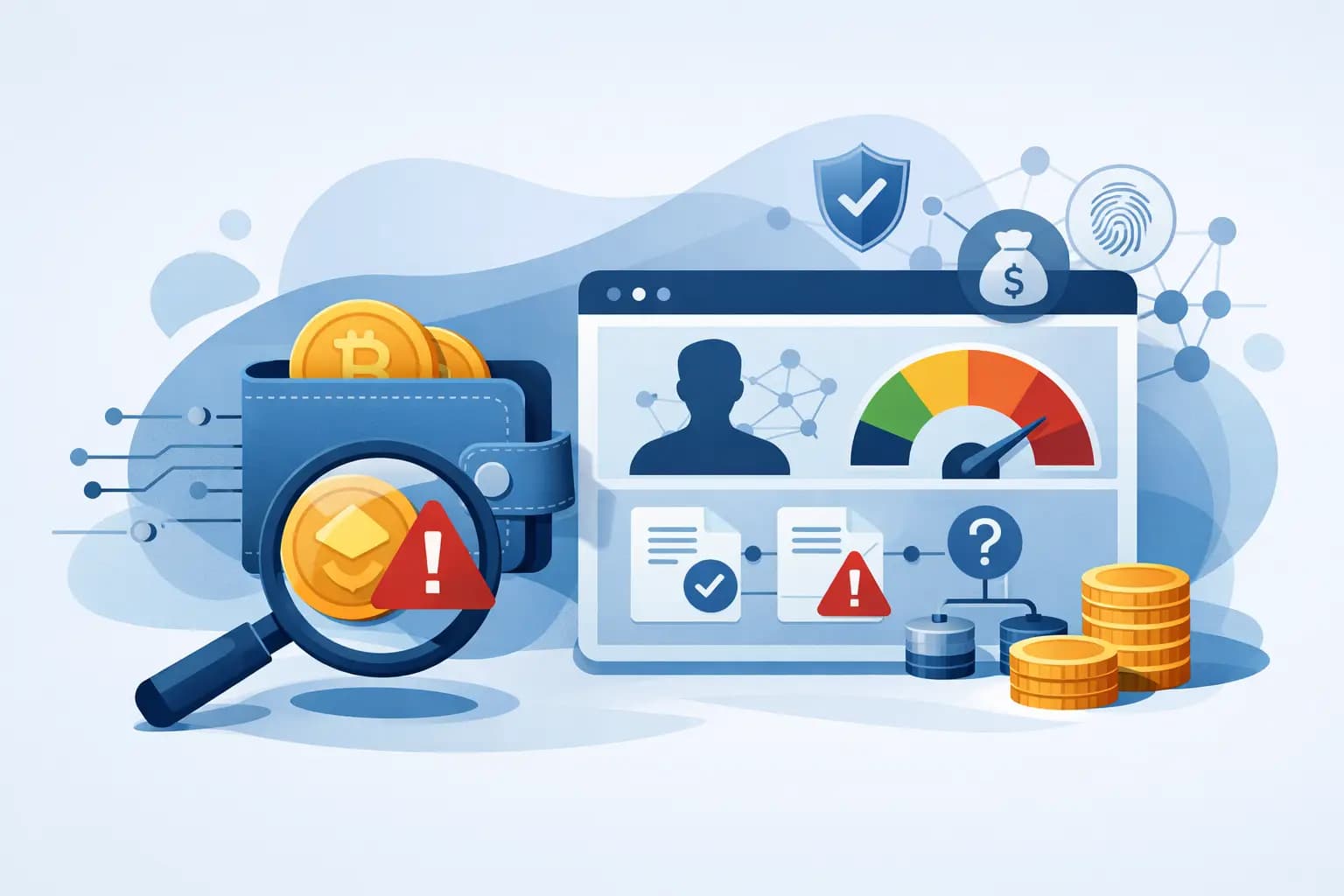
A wallet can look clean on the surface right up until a swap gets delayed, a counterparty goes quiet, or an exchange asks questions you did not expect. That is why knowing how to check wallet AML risk before you send or receive funds is not a nice-to-have. It is part of basic crypto operations if you want fewer surprises and better control.
For active users, the timing matters as much as the check itself. You may be reviewing a deposit address before crediting a client, screening a wallet before an OTC deal, or checking your own address history before moving funds into a stricter venue. In each case, the goal is the same - spot exposure early enough to decide whether to proceed, pause, or route funds differently.
How to check wallet AML without slowing down
The practical version is simple. You take the wallet address, run it through an AML screening tool, and review the resulting risk indicators before you transact. The hard part is not the click. It is reading the result correctly.
A useful wallet AML check should show more than a vague score. You want visibility into whether the address has direct or indirect exposure to categories that commonly trigger compliance concern, such as sanctioned entities, stolen funds, darknet activity, mixer interaction, fraud patterns, or high-risk services. You also want enough detail to understand whether the exposure is recent, repeated, or minor.
That distinction matters. A wallet with minimal indirect exposure from years ago is not the same as an address with recent direct contact with known illicit sources. Both may be flagged, but they do not present the same operational risk.
What data you need before you run a check
In most cases, you only need the public wallet address. Make sure you copy the exact address and confirm the network if the tool requires it. A TRON address, an Ethereum address, and a Bitcoin address do not follow the same structure, and screening the wrong format wastes time.
It also helps to know why you are checking it. If you are reviewing an inbound payment wallet, your tolerance may be different than if you are sending treasury funds to a new counterparty. Context changes the threshold. Some users just want to avoid obvious problem exposure. Others need a stricter internal policy because they interact with exchanges, payment processors, or business clients that expect cleaner transaction history.
If you are checking your own wallet, keep in mind that one address does not always tell the full story. Exposure can come from connected activity across multiple addresses, especially if funds have moved through bridges, DeFi protocols, swap routes, or pooled services.
The basic process for how to check wallet AML
Start by entering the wallet address into the AML screening interface. If the platform supports account-based AML checks, you may need credits or an account before running the scan. Once the result loads, look first at the top-level risk outcome, then move immediately into the source categories behind it.
Do not stop at the headline label. A wallet marked medium risk can be acceptable in one workflow and a bad idea in another. What matters is what created the score. If the result shows exposure to stolen funds, sanctions, or known scam infrastructure, that usually deserves more caution than generic interaction with high-risk exchanges. If the wallet touched a privacy-enhancing service, you need to consider how the next venue in your flow is likely to react.
Then check the proportion of exposure. Some tools show percentages or weighted attribution tied to risky counterparties. This helps you judge whether the wallet has occasional dust-level contact or meaningful transactional overlap. A tiny trace can still be relevant, but it should not be read the same way as large-volume interaction.
Finally, review timestamps when available. Recent exposure generally matters more than old exposure, especially if you are trying to predict whether the next platform in your route will flag the funds.
How to read wallet AML results without overreacting
This is where many users lose time. They see a flag and assume the wallet is unusable. Not always.
AML screening is a risk signal, not a court verdict. Blockchain analysis tools work by clustering behavior, tracking counterparties, and assigning categories based on known patterns and intelligence sources. That means results can be very useful, but they still need interpretation.
A direct hit is more serious than indirect exposure. Repeated transactions are more significant than a single historical touchpoint. Large-value interactions usually matter more than tiny amounts. Recency matters too. A wallet that recently received funds from a sanctioned source creates a very different risk profile than a wallet that had faint indirect proximity to a risky service years ago.
There is also a workflow question. If you are moving funds between your own wallets, you may accept a level of screening risk that you would never accept from an unknown sender. If you are preparing to deposit to a regulated exchange, you should usually take a more conservative view.
Common situations where a wallet AML check helps
The clearest use case is before receiving funds from someone you do not know well. A fast screening step can prevent you from accepting a payment that later causes friction when you try to swap, withdraw, or redeposit elsewhere.
It also helps before OTC-style transactions. If the other side sends an address for settlement, checking it first can reveal whether the deal carries hidden compliance baggage. The same goes for freelance payouts, affiliate payments, treasury movements, and large peer-to-peer transfers.
Another smart use case is before consolidating funds. If you merge assets from multiple sources into one main wallet without screening them first, you can spread risk across your own stack. That creates a bigger cleanup problem later.
For users who actively swap across services, AML checks also help with route planning. A wallet with elevated exposure may still move, but it may not be the best candidate for a stricter venue or a business-facing counterparty.
Limits of wallet AML screening
A wallet AML check is useful, but it is not magic. It does not tell you whether the person controlling the address is honest, whether they will complete a trade, or whether a future venue will make the same risk judgment as your screening tool.
Different providers use different heuristics, labels, and thresholds. One tool may treat a wallet as borderline while another marks it more aggressively. That does not mean one is wrong and one is right. It means AML risk is partly analytical and partly policy-driven.
There is also the issue of changing data. New intelligence can reclassify old activity. A wallet that looked ordinary last month can appear riskier after new enforcement actions, attribution work, or scam tracing updates.
So the right approach is operational, not emotional. Use the screening result as a decision input. Pair it with transaction size, counterparty trust, destination platform sensitivity, and your own tolerance for friction.
A faster way to build the habit
If you move crypto regularly, the best method is not to treat AML checks as an emergency tool. Treat them as a standard pre-transaction step for higher-value or higher-uncertainty flows.
That habit is easier when the check is fast, visible, and built into the same environment where you already manage transaction tasks. For users who want wallet screening alongside swaps and other execution utilities, platforms like 2AML fit that workflow well because the point is not extra theory. It is faster decisions with fewer blind spots.
A clean result does not guarantee a perfect transaction, and a flagged result does not always mean stop immediately. But checking first gives you something better than guesswork. In crypto operations, that is often the difference between moving with confidence and spending the next two days explaining a wallet history you never reviewed.