

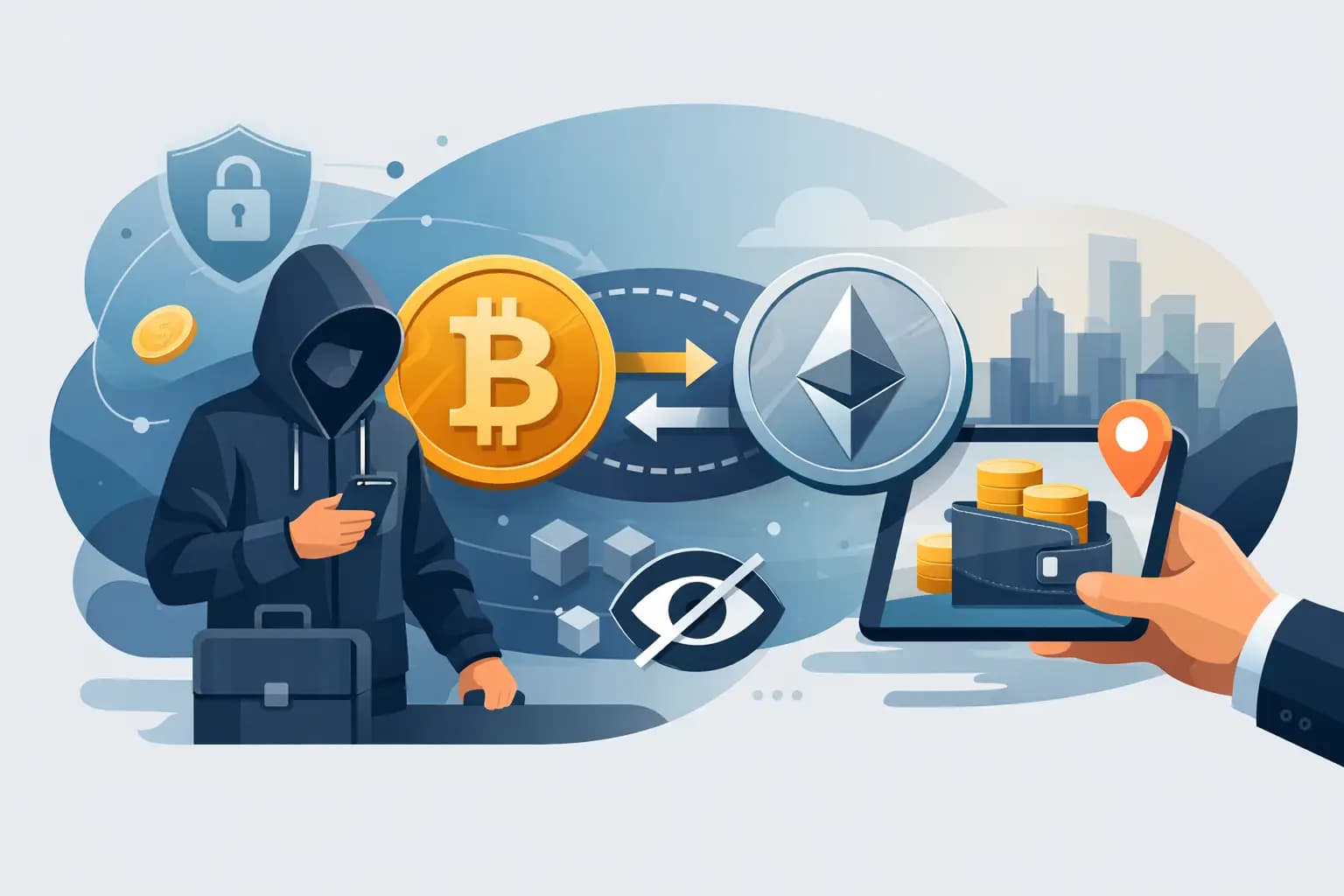
A crypto transfer can be public forever, even when the amount is small and the destination is routine. That is why users asking how to move crypto discreetly are usually looking for practical privacy: less unnecessary exposure, fewer avoidable wallet connections, and more control over who can associate activity with them.
Discretion is not the same as hiding illicit activity. It does not remove legal, tax, reporting, or compliance obligations, and it should never be used to bypass sanctions, evade investigations, or misrepresent the source of funds. Done properly, discreet crypto operations are about reducing the data you expose while keeping your records, wallet access, and transaction decisions under control.
What discreet crypto movement actually means
Most public blockchains make transaction data visible by design. Wallet addresses, timestamps, token amounts, smart contract interactions, and transfer paths can often be reviewed by anyone. An address may not display your legal name, but the activity around it can still create a recognizable profile.
That profile becomes easier to build when you reuse one wallet for everything: receiving income, trading, minting NFTs, interacting with DeFi protocols, paying vendors, and sending funds to friends. Each interaction adds context. Over time, a single exposed address can reveal balances, routines, counterparties, and holdings across connected wallets.
A discreet approach reduces that correlation. It starts with wallet organization, careful address handling, secure execution, and an understanding of the visibility trade-offs on each network. The goal is not to make money disappear. The goal is to avoid turning every legitimate transfer into a complete map of your on-chain activity.
How to move crypto discreetly with a controlled workflow
The strongest privacy habits happen before you send anything. Treat each transfer as an operational process rather than a quick wallet-to-wallet action.
Separate wallets by purpose
Use distinct self-custody wallets for distinct roles. A receiving wallet for client payments should not automatically be your trading wallet. A wallet used to connect to public DeFi applications should not also hold long-term reserves. Likewise, keeping a separate spending wallet can prevent a routine payment from exposing the address where you store larger balances.
This does not create anonymity by itself. Blockchain analysis can still identify patterns, especially when addresses interact repeatedly. But purpose-based separation limits the amount of context attached to any one address and reduces the fallout if a wallet becomes publicly associated with you.
Keep the structure simple enough to manage. Too many wallets can lead to lost recovery phrases, wrong-network transfers, and accounting confusion. Label addresses in your own private records, store backups securely, and know which wallet is intended for each activity before initiating a transfer.
Verify the destination before sending
Address errors are permanent on most networks. Confirm the destination address, asset, and network directly with the recipient or service. Do not rely on copied addresses from old chats, screenshots, or browser history. Clipboard malware and fake support messages are common causes of irreversible loss.
For a first-time destination, send a small test transfer when the amount justifies it. This adds a transaction, so it is not always ideal for privacy or cost, but it can be the sensible choice for a large payment or an unfamiliar network. Discretion should never come at the expense of basic transfer safety.
Avoid creating unnecessary public links
Do not publish receiving addresses in social profiles, public invoices, forum posts, or screenshots unless you are comfortable with the full transaction history becoming easier to track. If you need to receive payments from multiple unrelated parties, use fresh receiving addresses where the wallet and network support them.
Be cautious with wallet connections as well. Signing into every application with the same address creates more association points. Use a dedicated interaction wallet for unfamiliar applications, promotional claims, and experimental protocols. Review token approvals regularly, especially on EVM-compatible networks where approvals can remain active after a single interaction.
Choose services based on what they reveal and what they require
When converting one asset into another, the service flow matters. Some platforms require accounts and lengthy verification for every use. Others support non-custodial execution for eligible transactions, letting you provide a destination address and track the transaction without giving up private keys.
That convenience does not eliminate risk. Review the quoted rate, network, minimum and maximum limits, expected timing, and transaction status before confirming. Keep a record of the transaction ID, destination address, and purpose of the transfer for your own accounting. Privacy works best alongside accurate documentation, not instead of it.
For users who need an additional privacy layer for legitimate personal or business reasons, private-send transaction flows may be available depending on the asset, route, jurisdiction, and service rules. Use them responsibly. A privacy-focused flow should not be treated as a way to launder funds, conceal criminal proceeds, or defeat lawful compliance controls.
Screen risk before you accept or forward funds
Discreet movement is not only about what others can see. It is also about avoiding exposure to risky counterparties. Receiving assets from addresses connected to hacks, scams, sanctions, or other suspicious activity can create operational problems even if you were not involved in the original conduct.
Before accepting a significant payment or forwarding funds from an unfamiliar source, check the wallet's AML risk profile. A screening result gives you a clearer basis for deciding whether to proceed, request another payment method, or pause the transaction for further review. This is particularly useful for OTC-style trades, freelance payments, vendor settlements, and small businesses that receive crypto from multiple customers.
2AML brings wallet AML checks, swaps, private-send flows, and TRON energy tools into one operational interface. The benefit is not complexity for its own sake. It is the ability to assess a wallet, route an eligible transaction, and monitor progress without jumping between disconnected tools.
Privacy has trade-offs
More separation can mean more administration. More security checks can add time. A private-send flow may have different availability, limits, fees, or processing conditions than a standard transfer. Network choice also matters: some chains expose more application-level activity than others, while lower-cost networks may have different liquidity or wallet-support considerations.
There is no single setup that fits every transaction. A freelancer receiving routine stablecoin payments may prioritize fresh receiving addresses and clean records. A trader moving between venues may prioritize execution speed, network support, and transaction tracking. A business handling third-party funds may put risk screening and internal approval rules first.
The right approach depends on your purpose, amount, jurisdiction, counterparties, and tolerance for operational overhead. What should remain consistent is self-custody discipline. Never share your seed phrase. Confirm every signing request. Use hardware wallets for meaningful balances, and keep recovery materials offline and protected from casual access.
Reduce visibility without reducing accountability
A practical discreet-transfer workflow has four parts: separate your wallet roles, verify the route and destination, screen meaningful counterparty risk, and keep private records of what you did and why. This gives you better privacy without losing your ability to explain your own activity when necessary.
It also prevents a common mistake: treating privacy as a feature you switch on at the final transfer step. By then, an address may already be tied to public posts, exchange withdrawals, wallet connections, or earlier transactions. Privacy is a habit built through consistent wallet hygiene and intentional routing.
A final pre-send check
Before approving a transfer, pause for one minute. Confirm that the asset and network match the recipient's request, the address is correct, the wallet role makes sense, and the route does not create an unnecessary connection to your broader holdings. Check the fee and expected delivery time, then save the transaction details once it is broadcast.
Good crypto privacy is quiet, deliberate, and accountable. Build a workflow that exposes only what the transaction needs to expose, while keeping control of your keys, records, and decisions.