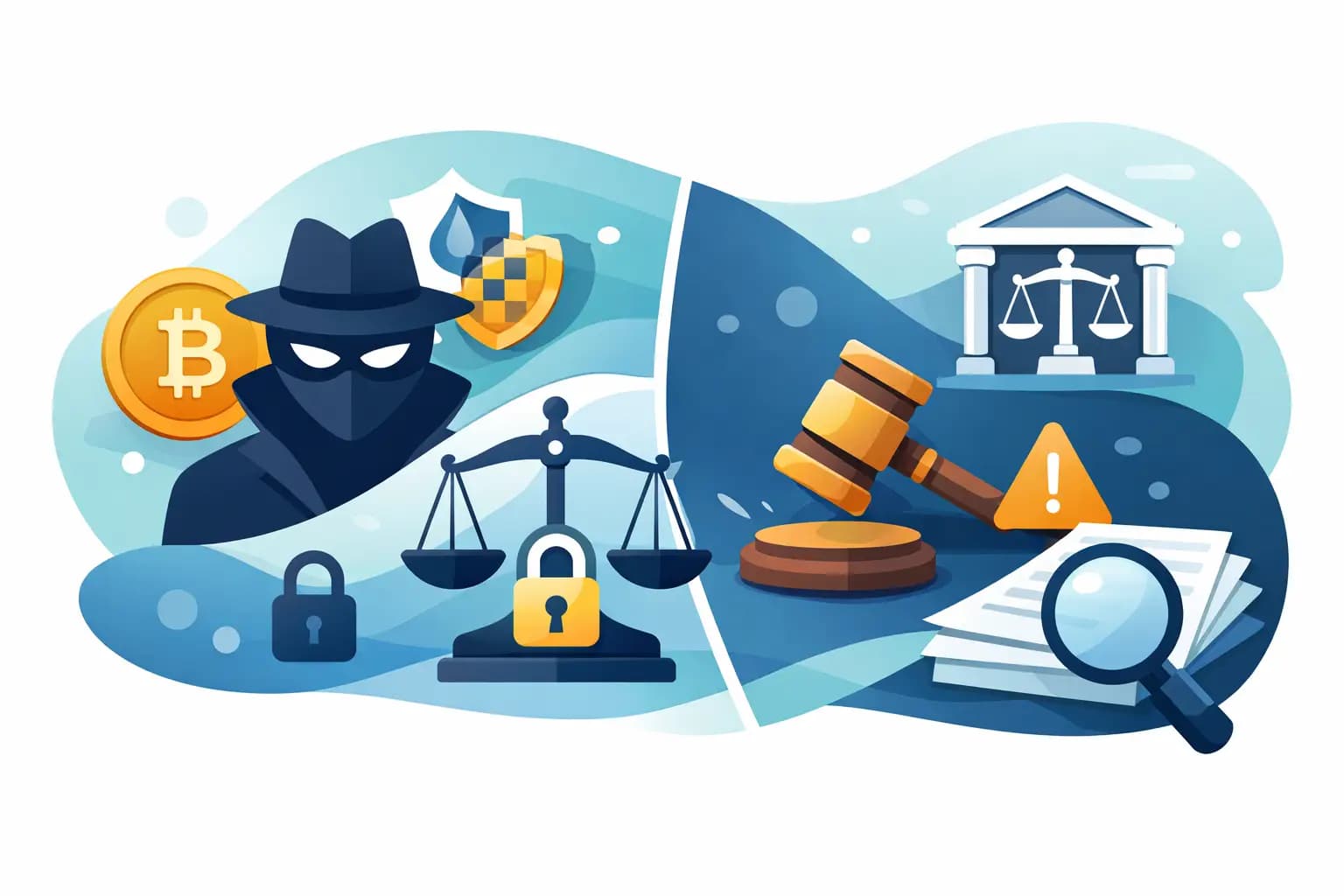
A privacy-focused crypto transaction can be technically valid, confirmed on-chain, and still create legal or operational problems later. That is why the question, is PrivateSend legal, does not have a one-word answer. The technology is not the whole story. Your location, the assets involved, the source and destination of funds, and the service you use all matter.
For most legitimate users, the practical goal is simple: preserve reasonable financial privacy without losing control of compliance risk. That requires knowing where privacy tools fit, what they do not protect you from, and when a transaction deserves additional screening before you send.
Is PrivateSend legal in the United States?
Using a privacy-enhancing transaction feature is not automatically illegal in the United States. PrivateSend is commonly associated with a CoinJoin-style process that combines inputs from multiple users to make straightforward transaction tracing more difficult. Privacy itself is not a crime, and public blockchain activity does not require every user to expose their complete financial history to every counterparty.
But legality depends on conduct, not just the feature name. A private-send transaction can create risk if it is used to conceal proceeds of crime, evade sanctions, avoid reporting obligations, or move funds on behalf of another person as an unlicensed business. In those cases, the issue is the underlying activity and intent, not merely the use of a privacy tool.
The same distinction applies across many jurisdictions. Some countries permit privacy tools but impose strict anti-money laundering requirements on businesses. Others restrict privacy coins, prohibit regulated exchanges from supporting certain privacy features, or require enhanced reviews for transactions connected to them. If you operate across borders, do not assume a rule that applies at home applies at the destination.
PrivateSend is not the same as total anonymity
PrivateSend can reduce the direct visibility of a transaction trail. It does not make funds disappear from the blockchain, remove every data point from the record, or guarantee that an activity cannot be investigated.
Public ledgers still preserve transaction timing, amounts, network activity, and wallet interactions. Blockchain analytics can identify patterns, especially when funds later move through centralized exchanges, payment platforms, OTC desks, or services that collect customer information. A privacy workflow may change what can be inferred from a single transaction, but it does not erase the wider operational footprint.
This matters when users treat a private-send flow as a compliance workaround. It is not one. A legitimate user may value discretion for payroll, freelance payments, personal security, treasury movements, or avoiding unnecessary wallet profiling. Those are different from attempting to hide illicit source of funds or bypass a restriction. The transaction context determines the risk.
Where the legal risk actually appears
The highest-risk situations are usually clear long before a transaction is broadcast. Risk rises when funds are connected to theft, fraud, ransomware, darknet markets, sanctioned persons or jurisdictions, or wallets already identified as high risk. Moving those assets through a privacy feature does not clean their history. It can add scrutiny.
Sanctions are especially important for U.S. persons and businesses with a U.S. nexus. You cannot transact with sanctioned people, entities, or blocked property simply because an on-chain route is less visible. Sanctions obligations can apply even when a transfer is technically possible and no traditional bank is involved.
There is also a business-versus-user distinction. Sending your own assets from one self-custody wallet to another is different from taking custody of client funds, accepting funds from the public, or operating a service that transmits value for others. Depending on the facts, a business may face money-transmitter registration, AML program, reporting, recordkeeping, and licensing obligations. The label "non-custodial" does not automatically answer every regulatory question.
Tax and reporting responsibilities also remain. Privacy tools do not remove the need to track cost basis, taxable disposals, business income, or other records required under applicable law. If you cannot explain where funds came from and why they moved, a later exchange review or tax inquiry becomes harder to manage.
Platform policies can be stricter than the law
A transaction may be lawful yet still trigger a hold, enhanced due diligence request, or rejection from a centralized exchange or service provider. Platforms set their own risk policies, and many treat CoinJoin activity, privacy-enhancing tools, or exposure to high-risk clusters as a reason for additional review.
That does not mean every flagged transaction is illicit. It means the receiving platform may need more information before it credits funds or allows a withdrawal. Users who need predictable access to exchange liquidity should plan for this possibility instead of assuming a private-send output will be handled like any other deposit.
The operational cost can be real: delayed settlement, source-of-funds questions, account restrictions, or a request for transaction documentation. If a payment is time-sensitive, test your route with a small, lawful amount where appropriate and keep clear records of the transaction purpose, originating wallet, and relevant counterparties.
How to use privacy tools without creating avoidable risk
The right approach is not to avoid privacy by default. It is to use it with clear intent and a defensible workflow. Before initiating a private-send transaction, confirm that you control the source wallet, understand the destination service's policy, and are not interacting with a prohibited person, address, or jurisdiction.
Wallet risk screening is useful before a transfer, particularly when funds came from a new counterparty, a trading desk, a freelance client, or a wallet with an unclear history. Screening does not make a transaction legal by itself, but it can surface obvious exposure before it becomes your problem. A workflow that combines transaction execution with wallet AML risk checks, such as 2AML, can help users keep that review close to the point of action.
Maintain records that match your real activity. For a personal transfer, that may mean wallet ownership notes and transaction IDs. For a business payment, it may include invoices, agreements, payment instructions, counterparties, and the reason a privacy feature was used. Clean records support legitimate privacy. Missing records make ordinary activity look harder to explain.
Avoid using private-send flows to bypass an exchange restriction, break up a suspicious payment pattern, obscure the source of funds, or route assets for someone else without understanding your obligations. Those decisions create exposure that no transaction interface can remove.
When to get legal advice
General guidance is not enough when the amount is significant, the transaction involves multiple jurisdictions, or the funds belong to customers or a business. Get qualified legal or compliance advice if you are launching a crypto service, receiving private-send outputs at scale, paying contractors internationally, managing a treasury, or responding to a platform compliance inquiry.
You should also seek advice when there is any possible sanctions connection, a known high-risk wallet exposure, or an investigation involving the source of funds. Waiting until assets are frozen or an account is restricted limits your options.
For ordinary self-custody users, the core rule is more practical: use privacy for privacy, not for concealment. Know your source of funds, screen unfamiliar wallet exposure, retain records, and confirm the receiving service can support the transaction. That keeps control where it belongs - with the user who understands every step before funds move.