

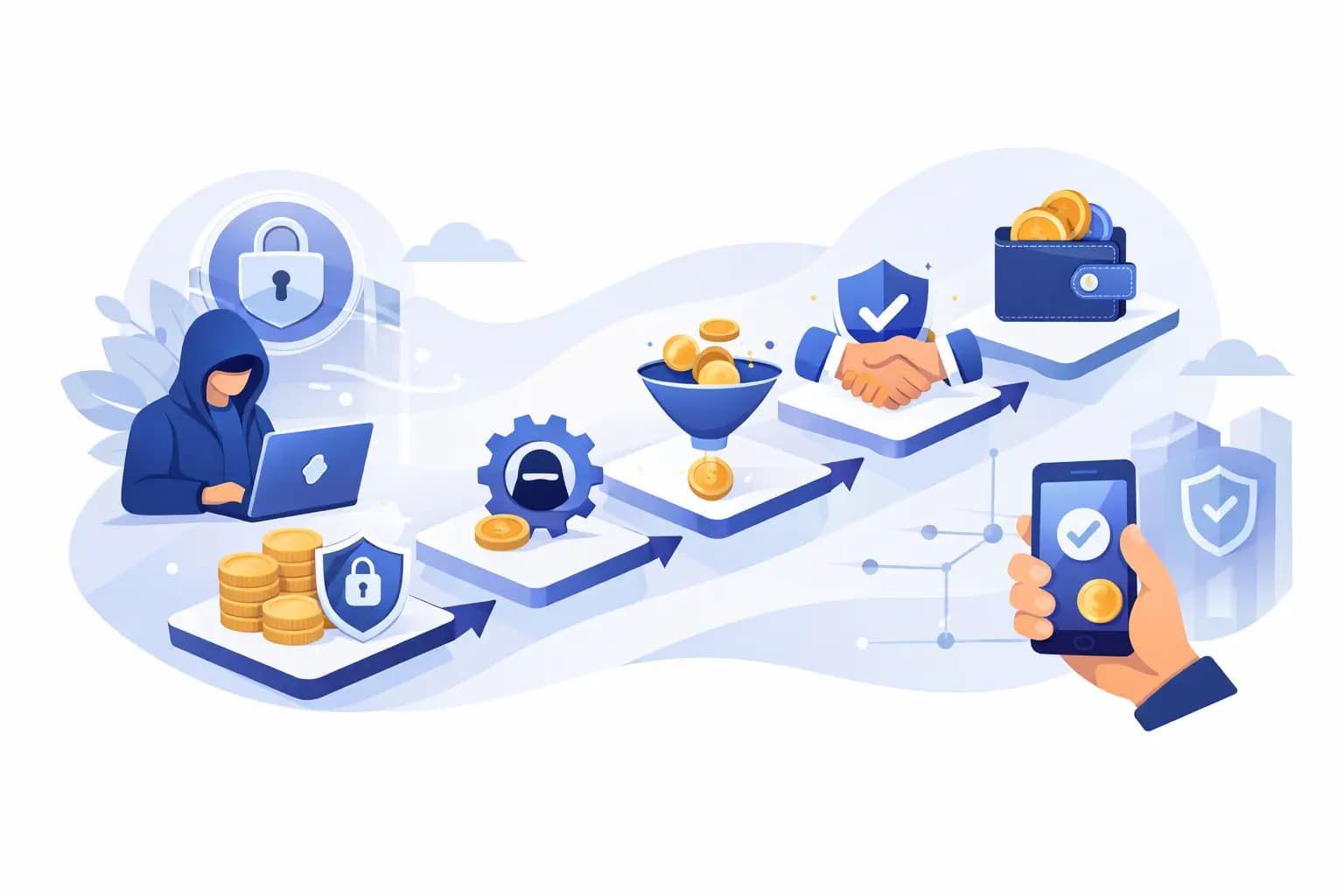
A private transaction flow setup should reduce unnecessary exposure without reducing your control. For active crypto users, that means knowing exactly which asset and network you are sending, where the transaction is in its lifecycle, and what to do if a route or status requires attention. Privacy is not a substitute for operational discipline. It works best when the flow is deliberate from the first address check to final confirmation.
Private-send tools are built for users who want more discretion around legitimate digital asset transfers. They are not a tool for concealing unlawful activity, bypassing sanctions, or avoiding required compliance controls. Start with a lawful purpose, verified destination details, and a clear record of your own transaction intent.
What a Private Transaction Flow Actually Controls
A private transaction flow is a structured process for moving supported digital assets while limiting unnecessary direct linkage between the sending and receiving sides of a transfer. The exact mechanics vary by provider, asset, network conditions, routing availability, and the amount being sent.
The practical value is not mystery. It is control over execution. A well-designed flow presents the inputs clearly, calculates the expected output before you confirm, and gives you a transaction reference so you can track progress without handing over custody of your wallet or private keys.
That distinction matters. A non-custodial workflow can coordinate transaction steps while you retain control of the wallet you use to fund the order. You authorize the transfer from your own wallet, follow the stated deposit instructions, and receive the final asset at the destination address you provide.
Step 1: Define the Transfer Before You Start
Start with the operational facts: the asset you will send, the asset you expect to receive if conversion is part of the flow, the source network, the destination network, and the receiving wallet address. Small errors at this stage can create larger problems later, especially when assets exist on multiple chains.
Do not rely on a token ticker alone. USDT, for example, may be available on several networks with different address formats, fees, confirmation times, and recovery options. Confirm the network in your sending wallet and the network accepted by the destination wallet. The asset and chain must match the route you select.
Use an address you control or an address supplied by a trusted counterparty for a legitimate purpose. If the funds are intended for an exchange, merchant, service provider, or business partner, check that its deposit policy permits the transaction type and network. A technically valid address is not always an operationally compatible destination.
For a larger transfer or a new destination, a small test amount can be sensible. It adds time and an extra network fee, but it can prevent a costly address or chain mismatch. Whether a test transaction is worth it depends on your familiarity with the address, the amount at stake, and the finality of the network involved.
Step 2: Review the Route, Limits, and Expected Output
Once you enter the transaction details, review the route before funding it. A clear interface should show the deposit asset, receive asset, network information, minimum and maximum amounts where applicable, expected output, and destination address.
Expected output is an estimate, not a promise that market conditions cannot affect. If the flow includes an exchange component, the final amount may change with price movement, available liquidity, network fees, or the time it takes for the deposit to arrive. Fixed-rate and floating-rate routes handle that exposure differently. A fixed rate may offer more certainty for a limited window, while a floating rate may reflect conditions when the transaction is processed.
Choose based on the job. If you need to meet a specific settlement amount, rate certainty may matter more. If you prioritize execution during changing market conditions, a floating route may be more appropriate. Read the displayed terms instead of assuming every route behaves the same way.
Also review the amount you are actually sending. Sending less than the required minimum can delay processing or make the order ineligible for automatic completion. Sending a materially different amount than instructed can create reconciliation issues. Copy the deposit amount and address directly from the order screen, then verify both in your wallet before broadcast.
Step 3: Fund the Order From Your Own Wallet
When the order is created, send the stated asset to the displayed deposit address on the specified network. This is the point where wallet-level accuracy matters most.
Check the first and last characters of the address after pasting it. Clipboard replacement malware exists, and a familiar-looking address is not a verification method. Confirm the selected network again, then make sure your wallet leaves enough native token for the transaction fee. On networks such as TRON, available resources and bandwidth can affect execution costs and timing.
Do not send funds from a third-party source unless the service explicitly supports it. Exchange withdrawals, smart contract interactions, or pooled wallet sources can introduce extra delays and may complicate the transaction flow. Funding directly from a wallet you control generally gives you the cleanest view of the outgoing transaction and its confirmations.
After broadcast, save the transaction hash. It is your on-chain reference for confirming that the deposit left your wallet and reached the required network. It is also useful if support needs to review a delayed or incomplete flow.
Step 4: Track Every Status Change
A private transaction flow setup should not leave you guessing after funds are sent. Use the order page or transaction tracker to follow the stages presented by the service. Typical updates may include waiting for deposit, confirming on-chain receipt, processing, sending the final transaction, and completed.
Each stage answers a different question. Waiting for deposit means the platform has not yet detected the required incoming transfer. Confirming means the transaction is visible but still accumulating network confirmations. Processing indicates the route is being executed. Completed means the outgoing transfer has been created, but you should still confirm receipt in the destination wallet or service.
Do not assume a delay means failure. Network congestion, low fee settings, confirmation requirements, and liquidity conditions can all affect timing. First check the deposit hash on the relevant blockchain, then compare the amount, network, and address against the order details. If those inputs match and the order remains unchanged beyond the stated processing window, use the order ID and transaction hash when contacting support.
Avoid creating duplicate orders while the first is still pending. A second transfer can make it harder to match deposits to the right transaction, particularly if the amounts are similar.
Step 5: Confirm Receipt and Keep a Minimal Record
When the status shows completion, verify the final transfer at the destination. Confirm the received asset, network, amount, and transaction hash. If the destination is a self-custody wallet, check the wallet activity and the block explorer. If it is a service account, allow for that service's own crediting policy and confirmation threshold.
Keep a minimal operational record for yourself: date, assets, networks, amounts, order ID, deposit hash, and final transaction hash. This is not about building unnecessary exposure. It is about being able to reconcile your own activity, resolve an issue, and document legitimate transfers when needed.
A good record also helps you spot mistakes. If you regularly move assets across chains, you may notice recurring friction points such as a network that takes longer to confirm, a destination that requires a memo, or a wallet that needs native gas maintained before sending.
Common Setup Errors That Slow Transfers
Most problems come from setup, not from the private-send flow itself. The most common errors are choosing the wrong network, sending below the minimum, omitting a required memo or tag, using an unsupported asset variant, or sending from a source that adds withdrawal delays.
There is also a privacy trade-off to understand. A private flow can reduce direct transaction linkage, but it does not make blockchain activity invisible or remove your responsibility to follow applicable laws and platform terms. Your own wallet behavior, address reuse, exchange policies, and public chain data still affect the overall privacy profile of an operation.
For that reason, keep the process simple. Use fresh, accurately verified destination details when appropriate, avoid mixing unrelated transfers into the same workflow, and do not rush the review screen. Speed comes from fewer corrections, not from skipping checks.
Build Privacy Into the Workflow, Not Around It
The strongest private transaction flow is one you can execute repeatedly without confusion. Set the route, verify the network, fund from a wallet you control, and follow the order status until the destination confirms receipt. A platform such as 2AML can bring private-send execution, wallet risk checks, swaps, and TRON resource tools into one operating layer, which reduces the need to jump between disconnected services.
The goal is practical: move digital assets with discretion, visibility, and clear ownership of every decision. When each input is verified before funds leave your wallet, privacy and operational control can work together rather than compete.