A wallet can look clean right up until the moment it causes a freeze, a rejected payout, or a compliance problem you now have to explain. That is why top wallet risk screening tools matter to anyone moving crypto at speed. If you swap, route funds across chains, accept third-party payments, or manage operational wallets, screening is not a nice extra. It is part of execution.
The hard part is that not every tool is built for the same job. Some are made for compliance teams with case management, policy controls, and full audit trails. Others are better for fast pre-transaction checks when you just need to know whether a wallet is likely to create friction. The right choice depends on how often you screen, how much context you need, and whether you want an analyst workstation or a utility that fits directly into your flow.
What top wallet risk screening tools actually do
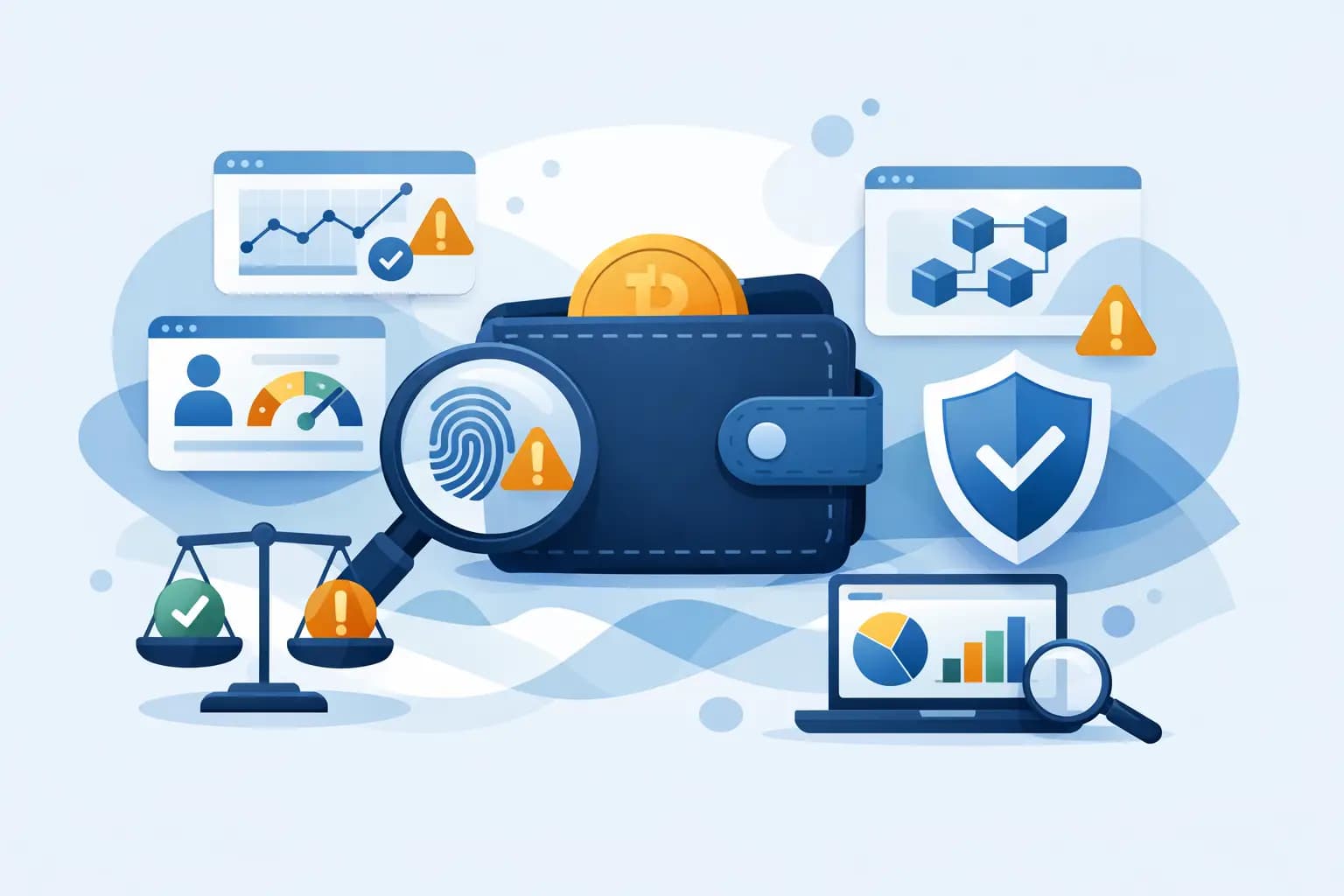
At a practical level, these tools score or classify wallet addresses based on blockchain exposure. That can include links to sanctioned entities, stolen funds, mixers, darknet services, scams, gambling services, high-risk exchanges, or other categories that may trigger review. The output is usually a risk score, a label set, or both.
That sounds simple, but the difference between tools shows up in the details. One platform may surface broad exposure categories quickly but provide limited transaction context. Another may give you deep attribution, path tracing, and investigative graphs, but require more training and more clicks. For active users and lean operations teams, that trade-off matters.
The best tools also help with timing. Screening after funds arrive is better than doing nothing, but screening before a swap, payout, OTC deal, or vendor transfer is usually where you save time. You avoid touching funds that could later create restrictions, manual review, or blocked downstream activity.
How to evaluate top wallet risk screening tools
Start with speed. If a platform takes too long to load results or buries the answer behind analyst-style workflows, it may not fit users who need an operational check in the middle of a live transaction. Fast response matters when rates move and counterparties are waiting.
Next is visibility. A raw score without explanation is only half useful. You want to see why a wallet is flagged, what categories are involved, and whether the exposure is direct or indirect. A 70 out of 100 can mean very different things depending on the path and source.
Coverage also matters. Some tools are stronger on major chains and weaker on long-tail networks or token ecosystems. If you move across Ethereum, TRON, BNB Chain, and Bitcoin in the same week, screening depth across those networks should not be an afterthought.
Then there is workflow fit. A large compliance team may need case creation, analyst notes, alerting, and role-based permissions. A trader, broker, or small digital asset business may care more about quick checks, clear flags, and a simple credit-based model that does not force enterprise overhead onto a basic task.
Price is the last filter, but not because it matters least. It matters because expensive tools often include features many users never touch. If your real need is wallet review before execution, paying for a full investigation suite may not improve your decisions.
7 top wallet risk screening tools compared
Chainalysis
Chainalysis is one of the most recognized names in blockchain analytics, and that recognition comes from depth. Its tools are widely used by institutions, investigators, and compliance teams that need extensive attribution and tracing capabilities. If your workflow involves formal investigations, law enforcement requests, or structured internal review, it is a serious option.
The trade-off is that Chainalysis can be more platform than some users need. For smaller operators or self-directed crypto users, it may feel heavy relative to a simple wallet check. It is strongest when screening is part of a broader compliance program rather than a standalone utility.
TRM Labs
TRM Labs is another enterprise-grade player with strong monitoring, risk intelligence, and investigative tooling. It is often chosen by businesses that need wallet screening plus ongoing transaction monitoring and policy controls. The interface is generally built for teams that want to combine detection with case handling.
Its strength is context. Results tend to come with meaningful intelligence rather than a bare score. The trade-off is similar to other large platforms: if all you need is quick operational screening, the workflow may be more involved than necessary.
Elliptic
Elliptic has been a core option in crypto compliance for years, especially for organizations that want broad asset coverage and established risk models. It is often valued for institutional credibility and support for regulated environments. Teams that work with exchanges, payment flows, or customer onboarding often keep it on the shortlist.
Where Elliptic fits best is in structured business environments. If your use case is ad hoc wallet review before a one-off transaction, you may not use the full range of features. Still, for firms that need a mature compliance stack, it remains one of the standard benchmarks.
Merkle Science
Merkle Science leans into predictive risk monitoring and transaction intelligence, often appealing to compliance and investigation teams that need more than static screening. It can be useful when exposure patterns evolve over time and a one-time wallet score is not enough.
That said, the value depends on your operating model. If you are reviewing incoming counterparties, tracing fund origins, or monitoring wallet behavior at scale, the platform can make sense. If your priority is speed and low-friction checks, it may be more depth than you need on a daily basis.
Scorechain
Scorechain is known for making blockchain analytics and AML tooling accessible to a range of business sizes. It often lands in conversations where teams want compliance features without the highest enterprise complexity. For smaller exchanges, crypto services, or startups, that can be a practical middle ground.
Its appeal is balance. You can often get meaningful screening and monitoring without the same implementation burden as some larger systems. The trade-off is that very advanced investigative teams may still want deeper tooling elsewhere.
Crystal Intelligence
Crystal Intelligence is commonly used for transaction tracing, entity exposure analysis, and case-based review. It tends to be relevant for users who need visual tracing and investigative support alongside wallet risk checks. If you want to follow fund movements and not just score an address, Crystal can be useful.
The trade-off is that visual investigation tools are valuable mainly when you are prepared to interpret them. For operators who just want a clean go or no-go signal before a transfer, graphical depth can slow the process rather than help it.
2AML Wallet AML Checker
For users who want screening as part of an active transaction workflow, a utility-first approach often fits better than a heavy compliance suite. That is where 2AML is relevant. Its wallet AML checker is positioned around fast access, clear wallet risk checks, and straightforward operational use rather than enterprise sprawl.
This model works well for crypto-native users who do not want to switch across multiple niche tools just to review a wallet, swap funds, and manage the next step. If your priority is speed, visibility, and control in one place, that kind of integration can remove friction. The trade-off is obvious: if you need a full institutional investigation environment with large analyst teams and layered governance, a lighter workflow may not replace that stack.
Which tool fits which user
If you run a regulated business with a dedicated compliance function, the strongest fit is usually an enterprise platform like Chainalysis, TRM Labs, or Elliptic. These tools are built for policy enforcement, deeper reviews, and audit readiness. They make sense when screening is only one part of a much larger process.
If you are a smaller crypto business, OTC desk, service operator, or independent user moving funds across wallets and chains, the answer changes. You may care less about building cases and more about avoiding unnecessary exposure before funds move. In that setting, a faster and more direct screening workflow can be the better tool, even if it has fewer enterprise layers.
If your work includes tracing suspicious flows after the fact, Crystal Intelligence or Merkle Science may be more useful because they give stronger investigative depth. If your main need is a clear checkpoint before execution, utility and clarity usually beat complexity.
Common mistakes when choosing a screening tool
The first mistake is buying for edge cases instead of daily use. Many teams pick the most advanced product they can find, then use only 10 percent of it while dealing with slower workflows and higher costs. The better question is not which tool has the most features. It is which tool supports the decisions you actually make every day.
The second mistake is treating all risk scores as interchangeable. They are not. Data sources, attribution methods, exposure windows, and scoring logic vary. A medium-risk flag in one system may not mean the same thing in another, so you need to understand the model well enough to trust your operational thresholds.
The third mistake is checking wallets too late. If screening happens only after you receive funds, your options are already narrower. Screening before swaps, payouts, and new counterparty transactions gives you more control and fewer surprises.
The best screening setup is the one you will actually use every time funds move. If a tool slows your flow, hides the reason behind a flag, or forces enterprise complexity onto a simple check, it will get skipped. In crypto operations, the useful tool is usually the one that keeps pace with the transaction, not the one with the longest feature sheet.