

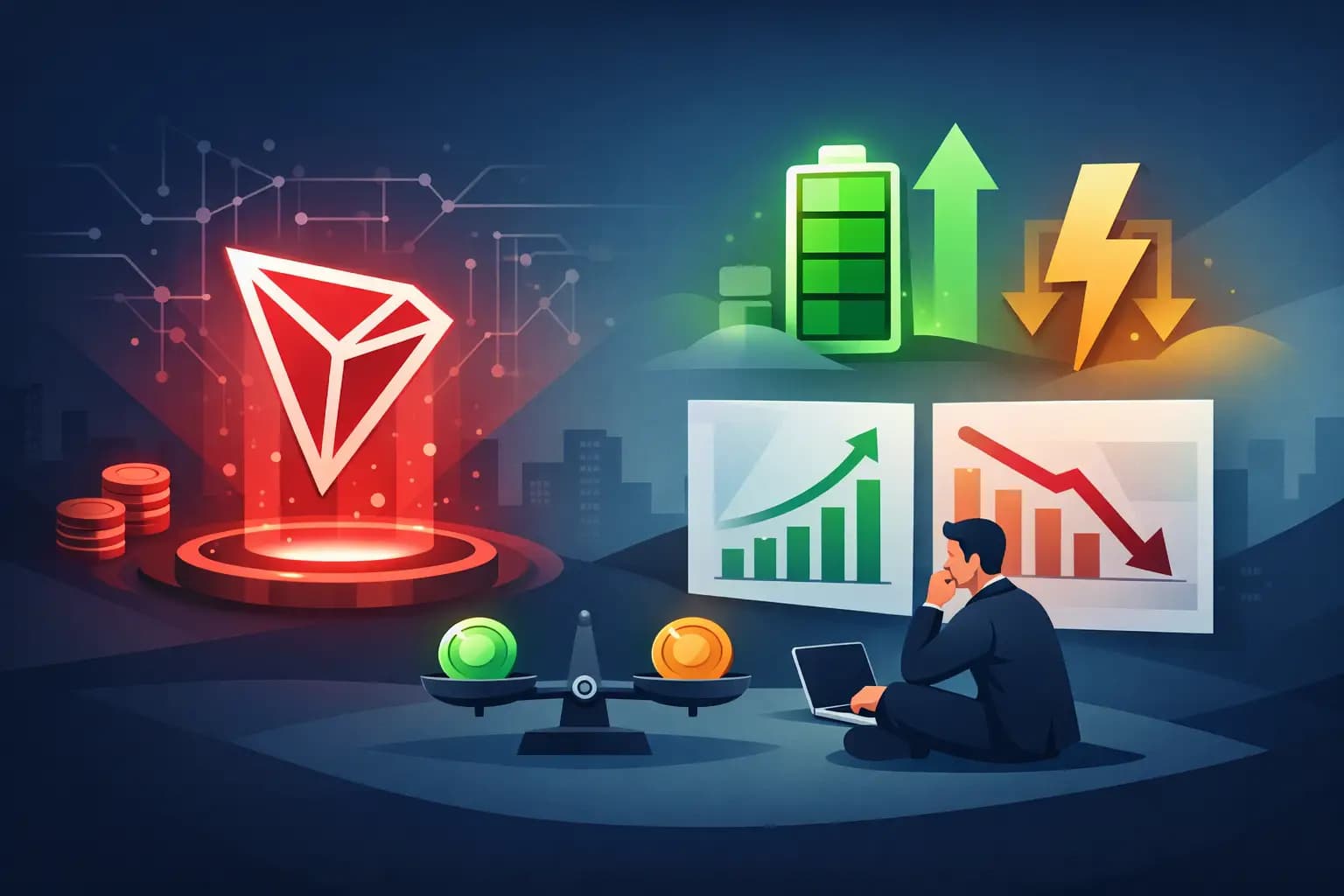
If you move USDT on TRON often enough, fee spikes stop feeling like a minor annoyance and start looking like an operational leak. That is where a tron energy rental review becomes useful - not as a sales pitch, but as a way to decide whether renting energy actually lowers costs for your transaction pattern.
For active wallet users, the question is simple. Are you better off paying regular TRX burn fees per transfer, or renting energy ahead of time and using network resources more efficiently? The answer depends on volume, timing, and how much control you want over execution.
What TRON energy rental actually changes
On TRON, energy is a network resource consumed by smart contract interactions. That matters because a standard TRX transfer is one thing, but a TRC20 transfer like USDT is another. USDT transfers usually consume energy, and if your wallet does not have enough, TRON fills the gap by burning TRX.
That burn is where costs become unpredictable for frequent users. One day the transfer looks acceptable. The next day, after a string of sends, the cumulative spend is high enough to notice. Renting energy changes the cost model. Instead of repeatedly paying full burn-based fees, you pre-purchase access to energy for a set amount of time and use it for eligible transactions.
This does not make every transfer free, and it does not remove all variables. It simply shifts you from reactive fee payment to planned resource usage. For traders, OTC-style operators, payment receivers, and anyone moving USDT between wallets regularly, that shift can be meaningful.
TRON energy rental review: who benefits most
The strongest case for rental is not the occasional user sending one transaction every few weeks. It is the person or team that knows TRON activity is recurring.
If you send USDT daily, batch treasury movements, settle freelance payments, move funds between exchanges, or rotate capital through multiple wallets, rental usually deserves a hard look. In those cases, predictability matters almost as much as raw savings. Fixed planning beats guessing what each transfer will cost at the moment you need it.
If your usage is light and irregular, the math gets less compelling. Renting energy you do not use is not efficient either. The best results come when your transaction count is steady enough to consume what you rented during the active period.
That is the main trade-off in any honest tron energy rental review. Rental can reduce cost per transaction, but only if your actual behavior matches the rental size and duration.
The real pros
The first advantage is lower transaction cost over repeated TRC20 activity. For frequent senders, that is the headline reason to use it. Instead of burning TRX on each transfer, you allocate energy once and spread the benefit across multiple transactions.
The second advantage is operational predictability. If you manage crypto flows as part of a business process, a trading routine, or a high-frequency personal workflow, uncertain fees are friction. Rental gives you a more stable baseline.
The third advantage is speed of execution at the decision level. When energy is already available, you do not need to stop and calculate whether a wallet has enough TRX buffer for burns. You can send the transaction with fewer last-minute adjustments.
There is also a convenience advantage when energy rental is presented inside a broader utility workflow. If you already swap assets, screen wallet risk, or manage transaction flows across tools, having TRON resource management in the same interface reduces tool switching. That matters more than many users expect, especially when time-sensitive transfers are involved.
The real cons
Rental is not a universal win. If your activity is infrequent, you may pay for capacity you never fully use. In that case, direct fee payment can be simpler.
There is also a timing issue. Energy rental works best when you know roughly when transfers will happen. If your usage is random, sizing the order becomes less precise.
Another limitation is that users sometimes expect rental to solve every TRON fee issue. It does not. Network behavior, resource consumption, wallet setup, and transaction type still matter. Renting energy helps with a specific part of the cost problem. It is not a blanket guarantee against all friction.
And of course, provider quality matters. A cheap rate on paper is not helpful if the process is slow, unclear, or difficult to verify. For crypto-native users, visibility matters almost as much as pricing.
What to look for in a TRON energy rental service
A useful service should let you place an order quickly, understand what you are buying, and track status without guesswork. That sounds basic, but in practice many crypto tools still create unnecessary ambiguity.
Clear order parameters matter. You should be able to see the amount of energy, rental period, destination wallet details, and expected processing flow before committing. Hidden assumptions are where mistakes happen.
Status visibility matters too. If you are using rental because speed and execution matter, you need to know whether the order is pending, processing, or completed. Real-time tracking is not a luxury feature here. It is part of operational control.
Good services also reduce unnecessary onboarding friction. If a platform makes a simple energy order feel like opening a bank account, it is solving the wrong problem. Crypto utility tools work best when they stay focused on the task.
This is one reason integrated platforms stand out. If a user already needs swaps, wallet screening, and TRON energy in the same operating cycle, keeping those functions under one interface saves time and lowers decision fatigue. 2AML fits this model by treating energy rental as part of a broader digital asset operations stack instead of a standalone widget.
How to decide if renting energy is worth it
Start with your own transfer history, not someone else’s average. Look at how often you send TRC20 assets on TRON in a week or month. Then compare that pattern to what you usually spend in TRX burns.
If you are sending enough volume that fees feel repetitive, rental is probably worth testing. If you only send occasionally, it may not be. The key is not whether rental is cheaper in theory. It is whether your transaction frequency is high enough to realize the benefit during the rental window.
It also helps to think in terms of workflow, not just single transactions. A one-off transfer rarely tells the full story. If your process includes moving funds from exchange to wallet, wallet to trading venue, venue to counterparty, and then back to cold storage, your total TRON cost is the combined effect of many transactions. That is where rental often starts to look better.
Common mistakes users make
One common mistake is ordering too little energy and assuming it will cover more transactions than it actually can. Another is over-ordering for a period when activity turns out to be low.
A third mistake is treating all transfers as operationally identical. They are not. If your usage varies by day, wallet, or transaction type, the most efficient rental size may change too.
The last mistake is ignoring interface clarity. Users often focus only on nominal price and overlook the cost of poor execution. If an order process is confusing or status updates are weak, the time lost can offset part of the savings.
Final take on this tron energy rental review
For active TRON users, energy rental is usually less about chasing a tiny discount and more about building a cleaner transaction workflow. When volume is steady, rental can reduce fee drag, improve predictability, and remove one more point of friction from routine USDT movement.
If your transfers are occasional, direct fee payment may still be the simpler choice. But if TRON is part of your regular operating stack, renting energy is often the more controlled option. The best move is to match the rental to your real usage pattern, then judge it by what crypto tools should always be judged on - lower friction, clear visibility, and fewer surprises when it is time to send.