

A TRC20 USDT transfer can look inexpensive right up until the wallet asks for more TRX than expected. That is because TRON fees are resource-based, not a simple flat charge per transaction. The cost depends on what the transaction does, the resources already available in the sending wallet, and current network parameters.
For active users, this changes how transaction costs should be managed. A basic TRX transfer, a USDT payment, and a smart contract interaction may all move funds on TRON, but they do not consume the same resources. Knowing the difference helps you avoid last-minute TRX top-ups, reduce repeated burn costs, and select the right amount of energy before you transact.
Why TRON Fees Change From Transaction to Transaction
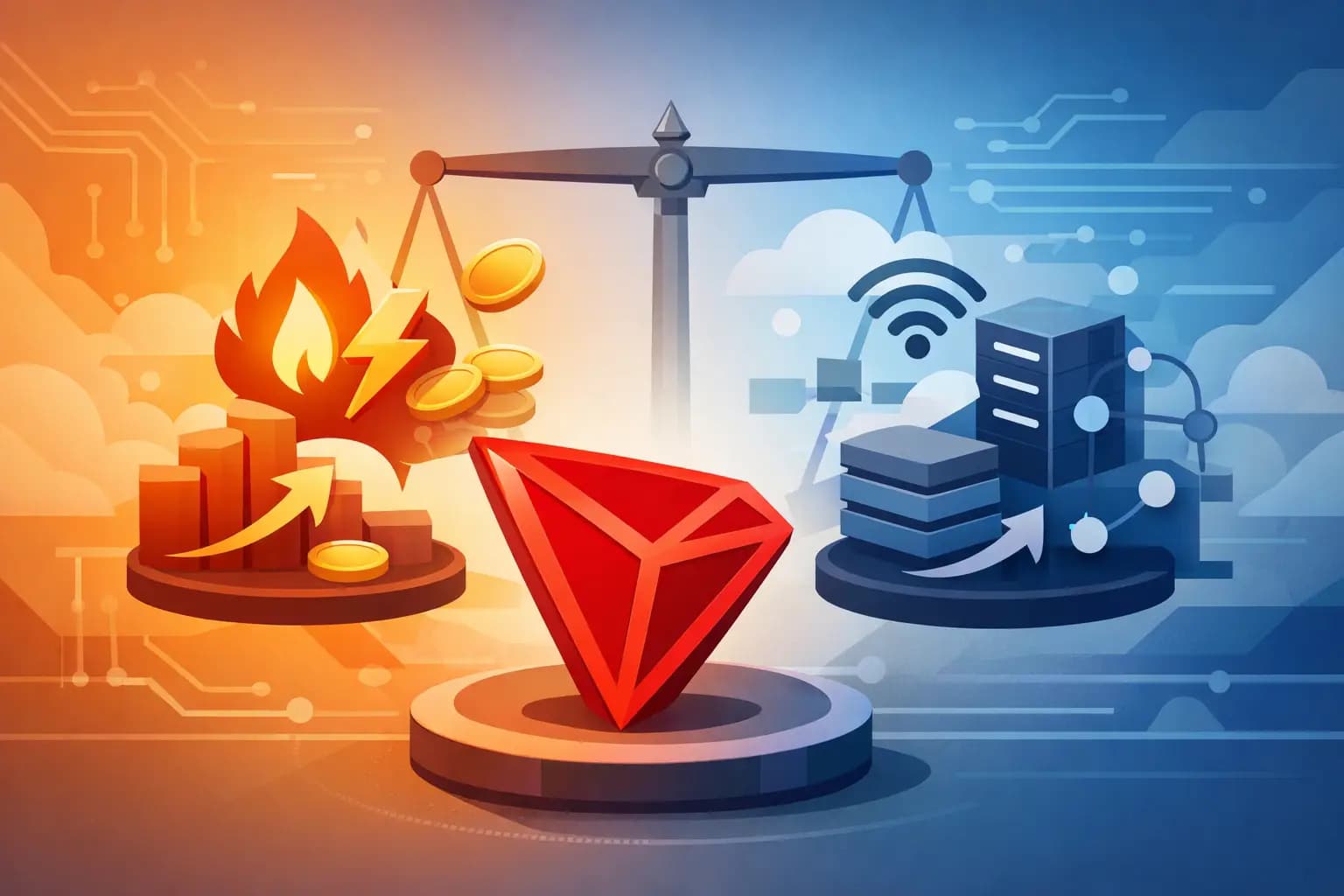
TRON uses two main resources for transaction execution: bandwidth and energy. When a wallet has enough of the required resource, the transaction can be processed without burning as much TRX. When it does not, the network charges TRX to cover the shortfall.
The practical rule is simple: regular on-chain data uses bandwidth, while smart contract execution uses energy. Some transactions use both.
Bandwidth covers transaction data
Bandwidth applies to the data recorded by the blockchain. A standard TRX transfer is usually a bandwidth-heavy action and may be covered by the wallet's available bandwidth allocation. Users can receive a limited amount of free bandwidth, and additional bandwidth can be obtained through staked TRX or delegated resources.
If your wallet does not have enough bandwidth, TRX is burned instead. For an occasional transfer, that may be a minor cost. For a wallet sending transactions frequently, the accumulated burn can become noticeable.
Bandwidth costs are generally easier to anticipate because simple transfers tend to follow a consistent pattern. Still, transaction size, account state, and network settings can affect the final amount. Always check the wallet confirmation screen before signing.
Energy pays for smart contract execution
Energy matters when a transaction calls a smart contract. This includes many TRC20 token transfers, DeFi actions, token approvals, staking actions, and contract-based payments.
USDT on TRON is the common example. Although the action appears to be a token transfer, it is actually a smart contract call. The USDT contract consumes energy, and any energy your wallet does not have may be paid for by burning TRX.
The energy required is not guaranteed to be identical every time. Contract logic, recipient status, the exact function called, and network configuration can change the required amount. A transfer to an address with no relevant token balance or no account activity can also create additional costs in some cases. Treat a previous transaction as a reference point, not a permanent quote.
The Three Costs Users Often Mix Up
Before optimizing anything, separate the costs involved. Network resource costs, energy rental costs, and service charges are not the same thing.
A network cost is the TRX burned because the wallet lacked bandwidth or energy. This is paid at transaction execution and is generally irreversible once the transaction is confirmed.
An energy rental cost is what you pay for temporary delegated energy. Instead of buying and locking your own TRX to generate resources, you obtain the energy needed for a selected period or transaction volume. The rental provider delegates the resource to your address, allowing the transaction to use that energy rather than burn TRX.
A service charge can come from the platform or route used to obtain resources. If you are swapping assets to acquire TRX or using another operational service alongside an energy order, that is separate from the on-chain resource consumption. Review each amount independently so you can compare the total cost rather than focusing only on the displayed rental price.
How to Estimate TRON Fees Before You Send
The most reliable estimate starts with the exact action you plan to take. Do not estimate a USDT transfer using the fee from a basic TRX transfer. Open the wallet or application that will submit the transaction and review its expected energy and bandwidth usage.
First, check your available resources. Look for bandwidth, energy, and the available TRX balance. A wallet may show a low transaction fee because it expects to use existing resources. If those resources are allocated elsewhere, depleted, or not delegated to the sending address, the actual result can differ.
Next, identify whether the transaction is a direct transfer or a contract call. Direct TRX transfers usually depend mainly on bandwidth. TRC20 transfers and DeFi interactions typically require energy. If the transaction combines several contract steps, such as approving a token and then depositing it, estimate each step separately.
Then allow for a margin. Resource estimates are useful, but a transaction can fail if the available energy is too low or if the contract requires more than expected. Failed contract execution may still consume resources. For high-value transfers or time-sensitive operations, holding a small TRX reserve is a practical safeguard.
Finally, confirm the recipient address and network. Sending a TRON-based asset to an incompatible address or selecting the wrong network is a far more expensive mistake than any resource shortfall. Low fees do not reduce the need for address verification.
How to Lower TRON Fees for Repeated Transactions
The best approach depends on transaction frequency. A user making one transfer may prefer to pay the network cost directly. A trader, payment operator, or service business sending regular TRC20 transfers usually benefits from planning resources in advance.
Staking TRX can be suitable when you transact consistently and are comfortable committing capital for a longer period. Staked TRX can generate energy or bandwidth, depending on your allocation. The trade-off is reduced liquidity: your TRX is committed instead of immediately available for other uses.
Energy rental is often more flexible for short-term or variable demand. You request a defined amount of energy for a selected duration, receive delegation to your wallet, and use it for the transaction. This can be more efficient than burning TRX when you know you have several USDT transfers or contract interactions ahead.
Rental is not automatically the cheapest choice for every situation. A small one-off transfer may not justify the setup or minimum order size. The advantage grows when the delegated energy will be used efficiently before the rental period ends. Estimate your upcoming activity first, then choose an order size that matches it.
For users who need an operational route rather than manual resource management, 2AML provides TRON energy rental alongside other crypto utility workflows. The key point remains the same: energy must be delegated to the exact wallet that will submit the transaction. A rental sent to the wrong address will not reduce the fee for your intended transfer.
A Practical Pre-Transaction Check
Before sending USDT or interacting with a TRON contract, verify four things: the recipient address, the network, available energy and bandwidth, and the TRX reserve in the sending wallet. This takes less time than resolving a failed transaction or funding an address under pressure.
If you are renting energy, place the order before opening the transaction confirmation flow. Confirm that the delegation has arrived, then submit the transaction from the same wallet address. Keep the transaction ID after broadcasting so you can track the result on-chain and compare the actual resource use with your estimate.
Avoid treating every low-fee network as free. TRON can be cost-efficient, especially for stablecoin transfers, but its resource model rewards preparation. Users who separate bandwidth from energy, keep a modest TRX buffer, and rent resources only when the expected usage supports it can keep costs more predictable while retaining control of their wallets.