

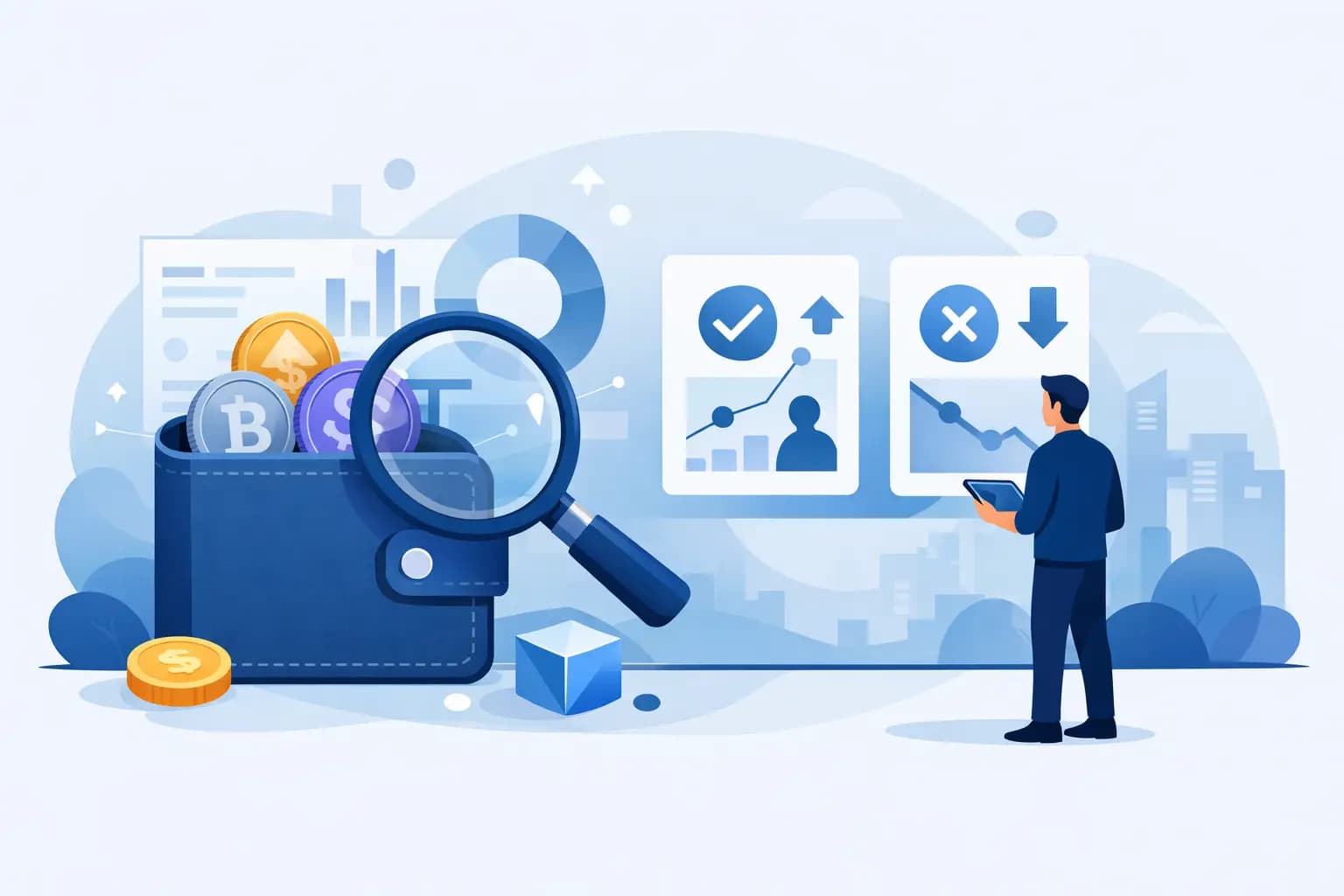
A swap can settle in minutes and still create a problem that follows your funds for months. That is why wallet screening matters. If you move assets between exchanges, DeFi protocols, OTC counterparties, or client wallets, a quick wallet screening check can help you catch obvious risk before you commit to a transfer.
For active crypto users, this is not about adding bureaucracy to a fast workflow. It is about avoiding preventable friction. A flagged counterparty, exposure to sanctioned activity, or a wallet tied to known scams can turn a routine transaction into delayed deposits, frozen balances, or extra compliance questions later.
What wallet screening actually does
At a practical level, wallet screening reviews a blockchain address against risk data. That data usually comes from transaction history, exposure patterns, known entity labels, sanctions screening, and links to categories such as stolen funds, mixer use, darknet markets, fraud, or high-risk services.
The output is not magic, and it is not a guarantee. It is a risk signal. Depending on the tool, you may see a score, a rating, category tags, and a breakdown of where exposure comes from. That gives you a faster way to decide whether to proceed, pause, or ask more questions.
This is useful because wallet addresses do not explain themselves. A string of characters tells you nothing about whether the funds came from a normal trading flow, a sanctioned source, or a wallet that has touched multiple risky hops. Screening adds operational context where raw blockchain data alone can be too slow to interpret during live transactions.
When wallet screening makes the biggest difference
The best time to screen is before the transfer, not after the problem shows up. If you are receiving payment from a new client, paying an unfamiliar contractor, filling an OTC order, or moving funds through a new route, screening helps reduce avoidable surprises.
For retail and freelance users, the value is usually simple. You want to know whether a wallet looks clean enough before you accept funds or send to a destination that may create issues at your next stop. If you later deposit to a centralized exchange or service provider, your counterparty history can matter just as much as your own intent.
For higher-volume operators, screening becomes part of transaction hygiene. If your workflow includes recurring payouts, treasury movements, customer settlements, or multi-wallet routing, a quick check before execution can save time that would otherwise go into exception handling.
It also matters during time-sensitive trades. In crypto, people often assume compliance checks slow everything down. In reality, a fast wallet screening step can speed up decision-making because it reduces uncertainty before funds are in motion.
What a screening result should tell you
A useful screening result should answer three questions quickly. First, how much risk is associated with the wallet overall? Second, what kind of risk is it? Third, how direct is that exposure?
Those distinctions matter. A wallet with direct interaction with sanctioned entities is a different case from a wallet with low-level indirect exposure many hops away. A wallet tied to stolen funds calls for a different response than one that has interacted with a gambling service or privacy tool, depending on your own policy and the platforms you use downstream.
This is where context matters more than headlines. Not every alert means do not transact. Not every clean score means no risk. A good operator looks at severity, recency, and source categories together.
If exposure is old, minor, and several steps removed, the practical risk may be manageable. If the wallet has recent direct links to scams, sanctions, or theft, that is a very different decision. Screening helps you separate these cases instead of treating all alerts the same.
Why false confidence is a mistake
Wallet screening is useful, but it has limits. That is worth saying clearly because many users treat a low-risk score as a final approval. It is not.
Blockchain analytics depend on address clustering, known labels, transaction tracing methods, and risk models. Those systems improve constantly, but they are still interpretations of onchain behavior. New addresses appear every day. Illicit actors adapt. Some services sit in gray areas. Privacy-preserving flows can make attribution less certain.
That means screening is strongest as a decision support tool, not as a substitute for judgment. If the transaction size is large, the counterparty is unknown, or the destination platform is strict, a screening result should be one input among several. Ask where funds are coming from. Confirm ownership when needed. Match the level of review to the size of the risk.
The flip side also matters. A high-risk result is not always proof of wrongdoing by the current wallet owner. Some users inherit risk through prior holders, exchange withdrawals, or reused deposit addresses. So the right response is not panic. It is to pause long enough to understand what the score is actually showing.
How to use wallet screening without slowing down your workflow
The best screening process is lightweight and repeatable. You do not need a committee meeting for every transfer. You need a clear threshold for when to check and what to do with the result.
Start by identifying the transactions that deserve a screen every time. New counterparties are an obvious one. Large incoming payments are another. Addresses used for business payouts, treasury transfers, or off-platform settlements also belong on that list.
Then decide what triggers escalation. For example, low-risk results may proceed normally. Medium-risk cases may require a quick manual review of categories and exposure depth. High-risk or sanctioned exposure may trigger a hard stop. The exact thresholds depend on your activity, your downstream platforms, and your own tolerance for operational friction.
This is where integrated tooling helps. If you already swap assets, manage transaction flows, and review wallet risk in separate places, each step adds delay and room for error. A more efficient setup keeps screening close to execution so you can assess the wallet and act without bouncing between tabs, providers, and status screens.
That operational benefit matters more than it sounds. In a fast market, the best tool is often the one that lets you make a good decision before the trade window closes.
Wallet screening for self-custody users
Self-custody gives you control, but it also gives you responsibility. No one is filtering counterparties for you. If you accept a payment into your own wallet and later send those funds to a platform with stricter controls, you may be the one explaining the history.
That is why wallet screening fits naturally with self-custody behavior. It supports the same mindset: verify first, move second. You keep control of your assets, but you add one more checkpoint before interacting with unknown addresses or routing funds across services.
For many users, this is less about formal compliance and more about keeping their options open. Clean operational history makes future swaps, withdrawals, and deposits easier. It reduces the chance that one careless transfer creates friction somewhere else.
What to look for in a screening tool
Speed matters, but speed alone is not enough. A useful tool should show clear risk categories, readable scoring, and enough transaction context to support a decision. If the result is just a number with no explanation, it is hard to act on.
Transparency also matters. You want to see whether the risk is direct or indirect, recent or old, concentrated or marginal. Without that detail, screening becomes a checkbox instead of a real control.
Just as important, the tool should fit the rest of your workflow. If you are screening wallets as part of swaps, payouts, or transaction routing, the process should feel like part of execution rather than a separate research project. That is the practical advantage of utility-first platforms built around transaction operations. 2AML is one example of that approach, combining wallet checks with other crypto tasks users already need to complete.
The real value of wallet screening
The real payoff is not the report itself. It is fewer bad transfers, fewer blocked deposits, and fewer moments where you realize too late that a wallet carried baggage you never saw.
Crypto moves fast, but that is exactly why basic controls matter. A short wallet screening step gives you a cleaner way to evaluate counterparties, protect your own transaction flow, and make decisions with more confidence and less guesswork.
If a transfer is worth sending, it is worth checking first.