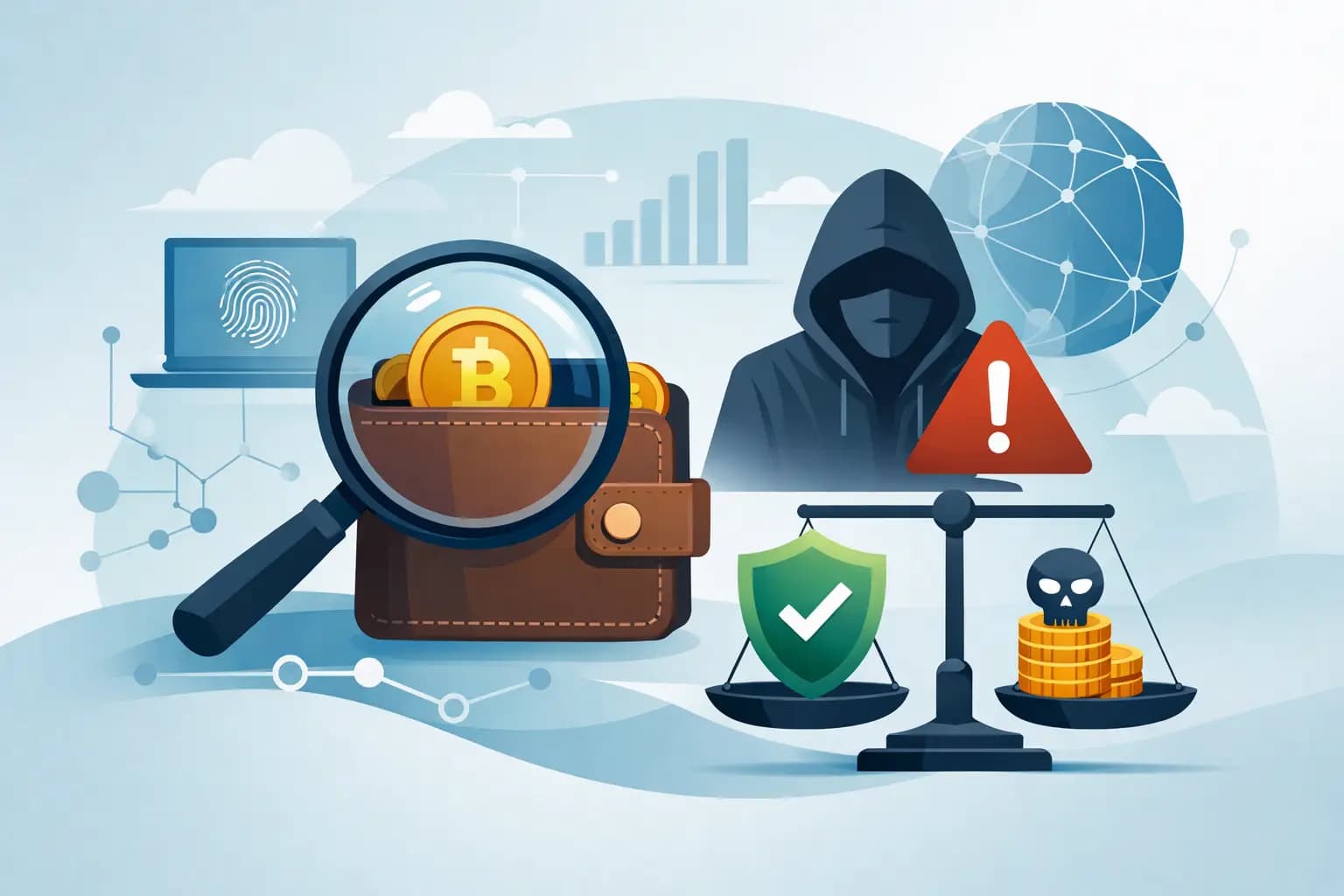
You usually do not think about AML screening until a transfer gets delayed, a counterparty asks questions, or funds land in a wallet with a history you did not expect. That is why knowing how to check wallet AML risk before you send or accept crypto is not just a compliance task. It is a basic operational control.
For active crypto users, wallet screening is less about bureaucracy and more about avoiding preventable problems. A quick check can help you spot links to sanctioned exposure, darknet activity, stolen funds, mixers, scams, gambling, or other categories that can trigger exchange reviews or create counterparty friction later. If you move size, manage client payments, trade across venues, or route assets between personal and business wallets, that extra step matters.
How to check wallet AML risk before a transfer
The process itself is simple. What matters is reading the result correctly.
Start with the destination or source wallet address you want to review. Paste the address into a wallet AML screening tool and run the check for the correct network. The system will analyze transaction history, exposure patterns, and known risk labels connected to that address. In most cases, you will get a score or rating, plus category-level detail that shows where the risk comes from.
At that point, do not stop at the top-line score. A wallet with moderate risk because it interacted with a gambling service is a different case from a wallet with moderate risk tied to stolen funds or sanctions exposure. The number helps you triage. The category breakdown helps you decide.
If the wallet belongs to your own operation, check both the sending and receiving sides when relevant. Risk can travel with incoming funds, but it can also show up in a recipient wallet that may create issues once assets leave your control. If the wallet belongs to a client, vendor, OTC counterparty, or payout recipient, treat the screening result as part of the transfer decision, not a formality after the fact.
What the AML risk score actually tells you
Most wallet screening tools condense a lot of blockchain data into a simple rating. That is useful, but only if you understand what it does and does not mean.
A low-risk result usually means the address has little or no meaningful exposure to flagged sources based on current attribution data. That is a green light for routine transfers, though not a guarantee. A wallet can still be new, thinly used, or not fully attributed yet.
A medium-risk result usually means the wallet has some measurable exposure to flagged categories, but the severity depends on source, timing, and transaction distance. This is where context matters most. Exposure from several hops away is different from direct receipt of suspicious funds. So is old activity versus recent activity.
A high-risk result means you should slow down. It may indicate direct or meaningful exposure to categories that often trigger compliance reviews or account restrictions. If the transfer is optional, this is often the point to pause and request a different wallet. If it is not optional, you need to document why the transfer is happening and decide whether the operational risk is acceptable.
The main mistake users make is treating every flagged result the same. That wastes time in low-signal cases and creates unnecessary confidence in serious ones. Scores are a starting point. Categories and patterns are the real decision layer.
The red flags that matter most
If you are screening wallets regularly, you will start seeing the same categories appear. Some require caution. Others should stop the transfer unless you have a very strong reason to proceed.
Sanctions exposure is the clearest example. Even indirect links can create problems depending on your counterparties and where you eventually send the funds. Stolen funds, fraud tags, ransomware exposure, and darknet market links also sit in the high-concern category because they can lead to frozen deposits, rejected transfers, or deeper reviews.
Mixer exposure is more nuanced. Not every mixer-related result means the same thing, and the distance from the source matters. But for many exchanges and service providers, mixer exposure raises the review threshold immediately. The same goes for scam-related activity and wallets tied to known theft patterns.
Gambling exposure can be lower severity depending on the provider, jurisdiction, and your use case, but it still may matter if you move funds into stricter compliance environments. High-volume interactions with high-risk exchanges can also deserve attention, especially if the wallet’s behavior looks transactional rather than personal.
You are not trying to reach perfect certainty. You are trying to identify whether this transfer is likely to create friction later.
How to decide when a wallet is safe enough
There is no universal score that means safe in every situation. The right threshold depends on what you are doing, how much value is involved, and where the funds are going next.
If you are receiving a small personal payment and the wallet shows low risk with no serious category matches, the decision is usually straightforward. If you are accepting a larger OTC settlement, paying a contractor from a business wallet, or preparing funds for deposit to a centralized exchange, your tolerance should be tighter.
This is where workflow discipline helps. Set a basic policy for yourself or your team. For example, low risk can pass, medium risk requires category review, and high risk requires pause or escalation. You can also use different rules for different transaction sizes. The point is consistency. Without it, screening turns into guesswork.
One practical way to think about it is simple: ask whether you would be comfortable explaining this wallet history to the next platform, partner, or reviewer that touches the funds. If the answer is no, do not rely on wishful thinking.
Common mistakes when checking wallet AML risk
The first mistake is screening too late. If you check after funds arrive, your options are worse. You may already be holding assets that are harder to move or explain.
The second is checking only one address in a flow. If you are running a multi-step transfer, screening the immediate sender but ignoring the final recipient can still leave you exposed to downstream problems.
The third is overreacting to weak signals while ignoring strong ones. A minor category hit several hops away may not be the issue. A direct link to stolen funds probably is.
Another common problem is assuming a fresh wallet is automatically clean. A new address with little history may simply have limited visibility. Low data is not the same as low risk.
Finally, some users treat AML tools as if they make decisions for them. They do not. They provide visibility. You still need to apply judgment based on amount, purpose, destination, and counterparty.
A practical workflow for active users
If you move crypto often, the fastest approach is to make screening part of the transfer path instead of a separate research task.
Check incoming counterparties before you share settlement details. Check outbound recipient wallets before final confirmation. Re-check if the transaction is delayed and the counterparty sends a replacement address. For larger transfers, save the result or note the score and categories so you have a record of what you reviewed at the time.
This matters even more for users handling multiple services in one flow, such as swapping, screening, and then sending onward. A utility layer like 2AML fits that operating style because it reduces tool switching and keeps the process visible. For users who care about speed and control, that matters as much as the score itself.
How to read edge cases without slowing down
Some wallets sit in the gray area. Maybe the score is not high, but the exposure categories are messy. Maybe the address has touched a service that is legal in one context and problematic in another. Maybe the wallet belongs to a real counterparty you know, but the history is noisier than expected.
In those cases, ask three practical questions. Is the exposure direct or several steps removed? Is it recent or old? And will the next venue in the chain care more than you do?
Those three questions usually cut through the noise. Direct, recent, and high-sensitivity exposure deserves caution. Indirect, old, and low-sensitivity exposure may be acceptable depending on amount and purpose. You do not need a legal memo for every transfer. You need a repeatable standard.
Checking wallet AML risk is really about staying ahead of friction. A 30-second review now is cheaper than explaining a flagged deposit later, and that is usually all the reason you need to make it part of every serious transfer.