

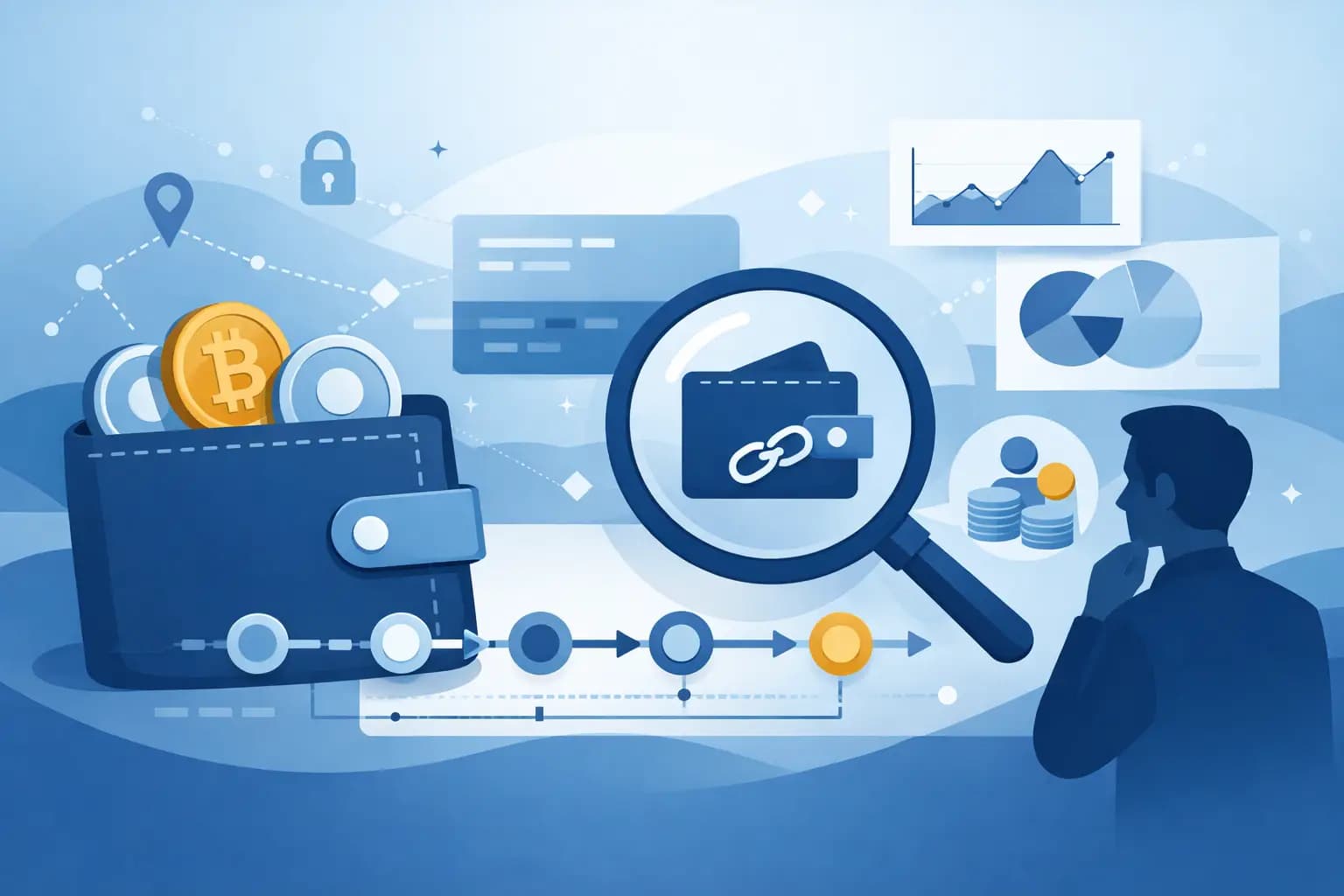
A wallet can look clean at first glance: a valid address, a recent balance, and a transaction waiting to be signed. Address provenance asks the more useful question: where did those funds come from before they reached this address?
For active crypto users, that history can affect more than a compliance score. It can influence whether a counterparty is worth dealing with, whether an exchange deposit may face review, and whether a transfer deserves a closer look before it becomes irreversible. The goal is not to turn every transfer into an investigation. It is to add context before you send.
What address provenance means in crypto
Address provenance is the traceable origin and movement history associated with funds in a blockchain address. It examines how assets arrived, the wallets and services involved along the route, and the activity patterns connected to those addresses.
On public blockchains, transaction data is visible. That does not mean it is self-explanatory. A transaction hash can show that one address sent assets to another, but it cannot automatically explain whether the sender was an exchange, a merchant, a personal wallet, a smart contract, a bridge, a sanctioned entity, or an address linked to a known exploit.
Provenance analysis turns raw transaction history into operational context. It may identify direct exposure to a labeled source, indirect exposure through several hops, recurring connections to a service, or behavior that resembles high-risk activity. The result is not a verdict on a person. It is a signal that helps users make better routing and transaction decisions.
That distinction matters. A wallet address is not an identity, and an address receiving funds from a flagged source does not automatically mean its current owner acted improperly. Funds move through exchanges, aggregators, bridges, DeFi protocols, payment flows, and shared services. Context, timing, amount, and transaction path all matter.
Why wallet history matters before you transact
Crypto transfers settle without a support desk that can reverse a completed mistake. If you send assets to a wallet that later triggers scrutiny, the operational cost can show up long after the transaction confirms.
For example, a freelance contributor may receive stablecoins from a new client and want to move them to an exchange. A trader may receive settlement from an OTC counterparty. A DeFi user may withdraw from a protocol after interacting with multiple contracts. In each case, checking address history can reveal whether the funds have recent links to known hacks, fraud schemes, illicit marketplaces, sanctions exposure, or high-risk services.
The practical benefit is not just risk avoidance. It is clarity. Instead of treating every incoming transfer as identical, users can decide whether to proceed, request a different payment source, separate funds for recordkeeping, or pause until they understand the transaction trail.
This is especially relevant when moving funds between platforms with different risk policies. One service may accept a deposit without issue, while another may ask for source-of-funds information based on its internal monitoring. Knowing the address context before initiating a transfer gives you more control over the next step.
Address provenance is not the same as a risk score
A risk score is usually a compressed output. It may indicate low, medium, or high exposure based on a provider's data, attribution methods, and risk rules. That is useful for fast screening, but it does not replace provenance.
Provenance explains the path behind the score. A wallet may show elevated risk because it received a small amount from a mixer years ago, because it interacted directly with a phishing wallet yesterday, or because a large share of its current balance can be traced to a recent exploit. These situations are not operationally equivalent.
Before acting on a result, look for the details that change the decision: the source category, the degree of connection, the recency of activity, and the value involved. Direct exposure is generally more meaningful than a distant transaction several steps away. Recent, repeated interaction usually deserves more attention than a one-time low-value transfer in an old wallet history.
A score can help prioritize. Provenance helps interpret.
How to review address provenance without slowing down
A useful screening flow should fit the pace of real transactions. Start with the address you plan to receive from, pay, or deposit from. Run an AML risk check before the larger transfer, not after it. Then read the result with the transaction itself in mind.
Check whether the address has labels or exposure categories that require action. If the result shows a connection to a high-risk source, determine whether the exposure is direct or indirect and whether it is current. A small, distant connection may call for documentation and caution. A direct recent link to stolen funds or sanctions-related activity is a stronger reason to stop and reassess.
Next, compare the transaction to the wallet's normal behavior. Does the amount fit the counterparty's stated purpose? Is the sender using a fresh address with no prior history? Has the wallet suddenly received assets from multiple unrelated sources before paying you? Unusual patterns do not prove misconduct, but they can justify a slower decision.
For business use, preserve the basics: transaction hash, date, asset, amount, counterparty information you have, and the screening result at the time of review. This is not bureaucracy for its own sake. If an exchange, accounting provider, or business partner asks later, a clean record is easier to explain than a reconstructed story.
Tools such as 2AML can make this step faster by placing wallet AML checks alongside the transaction utilities users already need. The value is simple: assess the address, understand the signal, then choose your route with more confidence.
The limits of address provenance
Blockchain analysis is powerful, but it is not perfect attribution. Labels can be incomplete, service wallets may aggregate activity from many users, and new addresses can appear before any reliable context exists. Different providers can also classify the same exposure differently because they use different datasets and methodologies.
Privacy-focused transaction tools add another limit. They can reduce the visibility of a transaction path, which means an analyst may have less certainty about where assets originated. Cross-chain bridges and swaps can create similar complexity by changing the asset and network while preserving only parts of the economic trail.
That is why address provenance should support judgment rather than replace it. If a screening result is unclear, the right answer may be to ask the counterparty for context, reduce transaction size, use a documented settlement route, or decline the transfer. It depends on the exposure, your risk tolerance, and the policies of the service you plan to use next.
Better decisions start before the transfer
The best time to review an address is when you still have options. Once funds are sent, deposited, or mixed into a larger wallet balance, your choices narrow quickly.
Make provenance checks part of specific moments in your workflow: before accepting payment from a new counterparty, before sending a large OTC settlement, before depositing to a centralized platform, and before consolidating funds from unfamiliar sources. For routine low-risk activity between your own known wallets, a full review may not be necessary every time. For new or high-value flows, it is usually worth the extra minute.
Address provenance will not tell you everything about a wallet or its owner. It can tell you whether the funds carry history that should change your next move. In a market built on irreversible transfers, that is often the difference between moving fast and moving blind.