

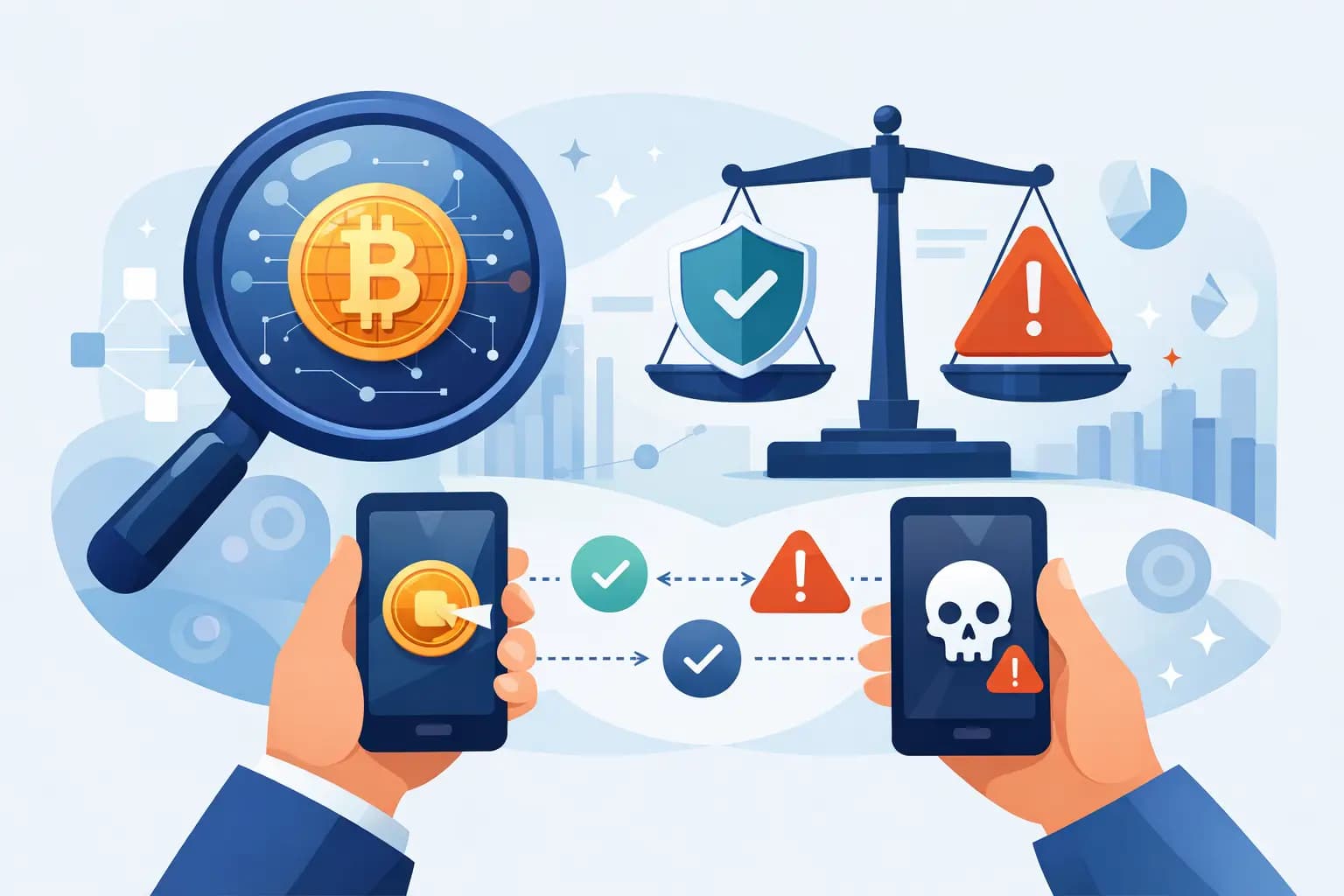
A wallet looks clean until one transfer changes the picture. Funds can move through mixers, sanctioned addresses, scam clusters, gambling services, hacked wallets, and high-risk exchanges long before they reach you. That is why crypto transaction risk screening has become a practical step for anyone moving size, processing client payments, or routing funds across multiple wallets.
This is not just a compliance box for large institutions. It is an operational filter. If you trade actively, settle OTC-style deals, accept crypto for services, or move assets between chains and counterparties, screening helps you catch avoidable problems before they spread through your wallet history.
What crypto transaction risk screening actually does
At a basic level, screening checks a wallet address or transaction against blockchain intelligence data. That data is used to estimate whether the funds are linked to categories that create legal, financial, or operational risk. The result is usually a score, a label, or a risk breakdown rather than a simple yes or no.
That distinction matters. Screening does not prove criminal intent, and it does not replace judgment. It tells you whether the address or transaction has meaningful exposure to flagged activity and whether that exposure is recent, direct, or distant.
For active users, that means fewer blind spots. You can review an incoming payment before touching it. You can check a destination wallet before sending. You can separate low-risk operational flows from funds that may deserve a second look.
Why screening matters for self-custody users
In crypto, self-custody gives you control, but it also gives you responsibility. If risky funds land in your wallet, nobody steps in to clean up the history for you. You still control the keys, but future counterparties, exchanges, OTC desks, payment processors, and compliance teams may evaluate that wallet based on what it has received.
This is where crypto transaction risk screening stops being abstract. A freelancer accepting stablecoin payments may want to check a client wallet before invoicing. A trader rotating funds between exchanges may want to avoid receiving assets from an address tied to theft or sanctions exposure. A small crypto business may need to review deposit addresses before reconciling customer payments.
The cost of skipping that step depends on the situation. Sometimes nothing happens. Sometimes the funds trigger delays, manual review, off-ramping problems, or counterparty rejection. The issue is not always whether funds are technically spendable. It is whether using them creates friction later.
What gets flagged during crypto transaction risk screening
Most screening systems look for exposure to known risk categories. These usually include sanctions, dark market activity, stolen funds, ransomware, fraud, mixers, gambling, high-risk services, and suspicious exchange flows. Some tools also track indirect exposure, which means the wallet may not have touched a flagged source directly but is only a few hops away.
That last part is where context matters. Direct receipt from a sanctioned wallet is not the same as remote exposure through several unrelated transactions. A wallet that interacted once with a high-risk service two years ago is not the same as one that routes funds through that service every week.
Good screening is not just about spotting a label. It is about reading the type of exposure, transaction timing, proximity, and concentration. If 2 percent of a wallet's history touches a risky cluster, that deserves a different response than 80 percent.
How risk scores should be interpreted
A risk score is a starting point, not a verdict. Many users make the mistake of treating any score above a threshold as an automatic rejection. That can produce false positives, unnecessary delays, and bad decisions.
A smarter approach is to ask four questions. What category was flagged? Was the exposure direct or indirect? How recent was it? How much of the wallet's activity does it represent?
For example, a payment linked directly to stolen funds is a very different scenario from a wallet that once received assets from a high-volume exchange address later associated with mixed customer flows. Both may trigger alerts. Only one may justify immediate refusal.
This is why screening works best when it supports workflow decisions instead of replacing them. The goal is not to generate alerts. The goal is to decide whether to proceed, pause, request another wallet, isolate funds, or document the reason for accepting the transfer.
Where screening fits in a real transaction flow
The best time to screen is before funds move, not after. That sounds obvious, but many users only check a wallet once a deposit is already confirmed. At that point, your options are narrower.
If you are receiving funds, screen the sending wallet before you share a deposit address or before you treat the incoming payment as usable. If you are sending funds, check the destination wallet so you are not routing assets into a counterparty problem. If you are swapping assets, review both sides when possible, especially if the transfer comes from a third party or a freshly created address with no clear history.
For repeat counterparties, periodic re-checks still make sense. Wallet behavior changes. A low-risk address today can become a higher-risk address later if its transaction pattern shifts or new attribution data appears.
Limits of crypto transaction risk screening
No screening tool sees everything in perfect detail. Attribution quality varies. Wallet clustering is probabilistic. New scam infrastructure appears quickly. Some services deliberately obscure flow patterns, and some labels can lag behind on-chain activity.
There is also a trade-off between sensitivity and noise. A strict model catches more edge cases but may flag more clean users who happen to interact with complex liquidity paths. A lenient model creates fewer false alarms but may miss early signals.
For that reason, crypto transaction risk screening is strongest when used as part of a repeatable process. Check the wallet, review the category, decide based on your risk tolerance, and keep a record if the transfer matters to your business. The process should be fast enough to use consistently. If screening takes too long or creates too much ambiguity, users skip it.
What a practical screening workflow looks like
For most crypto-native users, the workflow should be simple. Start with the wallet address or transaction hash. Run the check. Review the score and category breakdown. If the result is low risk, proceed. If it comes back medium or high, do a quick second pass on the source of exposure before deciding what to do next.
In practice, there are usually four reasonable responses. You proceed as normal, you ask the counterparty for a different wallet, you isolate the transaction from your main flow, or you decline it. Which option makes sense depends on volume, urgency, and how much downstream exposure you can tolerate.
This is where tooling matters. A good interface should not force users to decode raw chain analytics every time. It should surface the right signals fast, make the result understandable, and support action without dragging the transaction into a separate compliance project.
For users who already manage swaps, payment flows, and network costs, having screening in the same operational environment reduces friction. That is one reason platforms like 2AML are useful to active users who want execution, visibility, and risk checks in one place rather than stitched across multiple dashboards.
When to be stricter and when flexibility makes sense
If you process customer payments, settle larger transfers, or send funds to regulated off-ramps, stricter thresholds are usually worth it. The downside of a false negative is higher because the transfer may affect future counterparties or account access.
If you are moving smaller amounts between your own wallets, flexibility may be reasonable, especially when the exposure is indirect, old, and low concentration. The point is not to overreact to every alert. It is to avoid obvious preventable problems while keeping your operation moving.
A screening policy that is too loose creates avoidable risk. One that is too rigid slows everything down and rejects legitimate activity. Most users need something in the middle - fast checks, clear thresholds, and room for judgment when the data is not black and white.
Crypto moves fast, but bad wallet history lasts longer than a single transaction. Screening gives you a chance to catch issues early, keep your flows cleaner, and make better decisions before funds land where you do not want them.