
A swap can look simple: send one asset, receive another. With custodial swaps, the operational model behind that exchange changes the answer to a more important question: who controls the funds while the transaction is in progress?
For active crypto users, that distinction affects more than philosophy. It determines whether a provider can pause withdrawals, require account access, hold funds for review, or manage the private keys tied to your balance. It also shapes how quickly you can move, what information the provider may require, and how much counterparty exposure sits between your wallet and the destination address.
What Are Custodial Swaps?
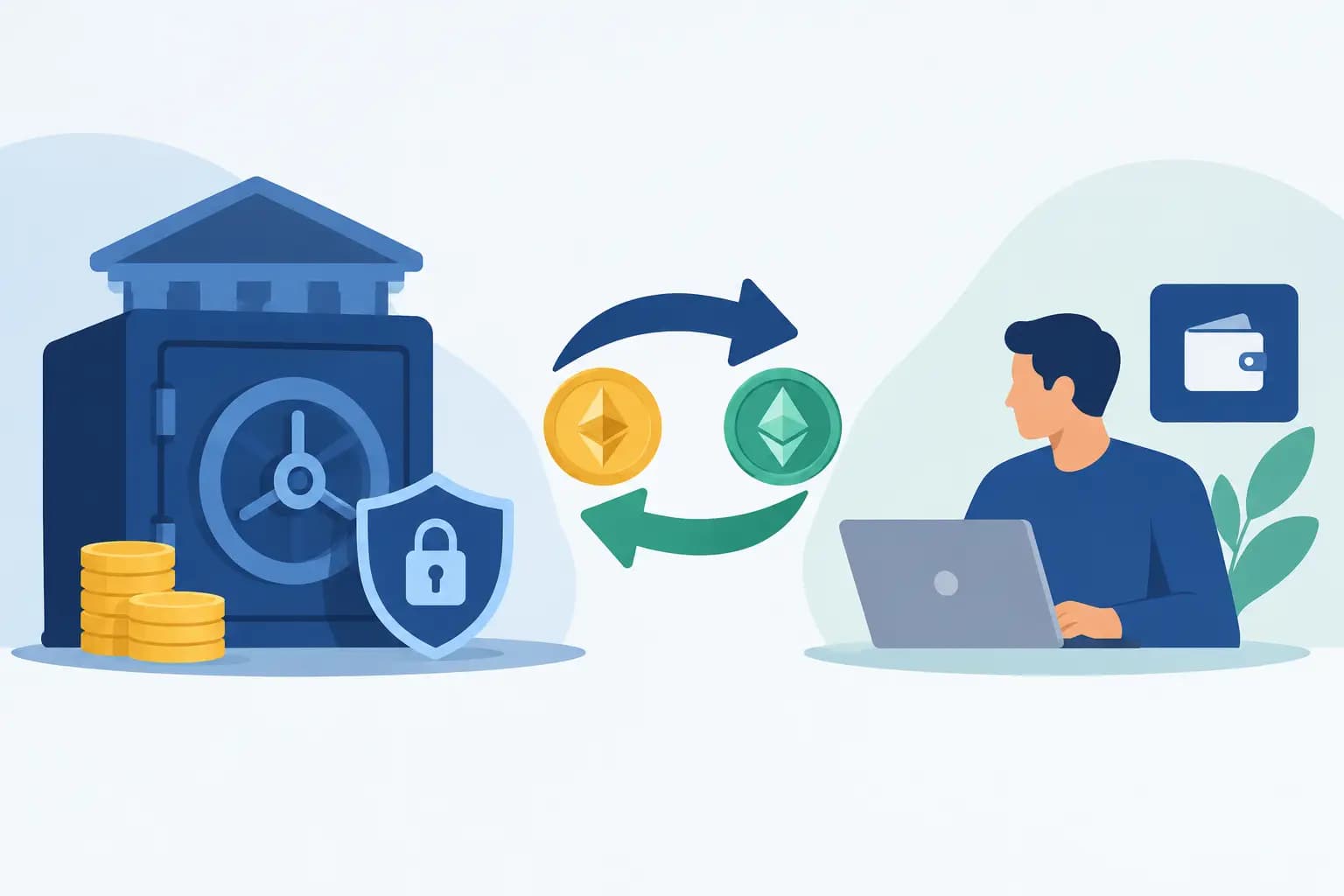
A custodial swap is an asset conversion executed through a provider that holds customer assets or controls the wallet infrastructure used for the trade. Usually, you deposit crypto into an account or platform-controlled wallet, place a conversion order, and withdraw the resulting asset afterward.
This is common on centralized exchanges and broker-style platforms. Your account may show a balance in BTC, ETH, USDT, or another asset, but the platform, not you, controls the private keys. The provider maintains internal records of what it owes each user and processes deposits, trades, and withdrawals through its own operational systems.
That structure can be convenient. A platform can match orders internally, aggregate liquidity, provide stored balances, and let users make repeated conversions without sending a new on-chain transaction for every trade. The cost of that convenience is control. Until you withdraw to a wallet you manage, access to the assets depends on the provider's systems, policies, and availability.
How a Custodial Swap Flow Works
The typical flow starts with an account. You deposit an asset into an address controlled by the service, or you already hold a balance there. The provider credits your account after its required confirmations, applies its quoted rate or order-book execution, and updates the balance in the asset you selected.
When you withdraw, the platform processes a separate transaction to the wallet address you provide. Depending on the service, that withdrawal may be automatic, queued, subject to limits, or reviewed before release.
The key point is that the trade and the on-chain movement are not always the same event. A conversion inside a custodial platform can happen on an internal ledger. Your on-chain transaction may occur only at deposit and withdrawal. This can reduce friction for frequent traders, but it means the account balance is a claim against the platform rather than assets held directly in your wallet.
Where Custodial Swaps Can Make Sense
Custody is not automatically a bad operational choice. It can be useful when the workflow genuinely benefits from it.
A trader making multiple conversions in a short period may prefer an account balance over repeated wallet-to-wallet transfers. An operator working with deeper order books may need features associated with a centralized venue, such as limit orders, advanced market data, or API-based execution. A business may also use a custodial provider when internal controls require account statements, authorized users, or centralized reporting.
In these cases, the question is not whether custody is acceptable in theory. It is whether the service, exposure period, and controls fit the transaction. Holding working capital on a platform for a planned trading session is different from leaving long-term reserves there because moving them feels inconvenient.
Speed can also be conditional. Internal conversions may be fast, but deposits and withdrawals remain dependent on network confirmations, wallet maintenance, risk controls, and the provider's processing schedule. A displayed balance does not guarantee that funds can be moved out immediately.
The Trade-Off: Convenience Versus Direct Control
Custodial swaps place a third party between you and your assets. That creates several practical considerations.
First, there is counterparty risk. If a platform has technical problems, liquidity issues, security incidents, or operational restrictions, you may not be able to withdraw on your preferred timeline. Even a legitimate, well-run service can pause activity during maintenance or address-chain incidents.
Second, there is policy risk. Providers can apply withdrawal thresholds, regional restrictions, account verification requirements, or transaction reviews. These measures may be part of a service's compliance and security processes, but they can conflict with a user who needs immediate access to funds.
Third, there is visibility risk. A custodial interface may show completed execution while the actual withdrawal is pending. For time-sensitive use cases, such as cross-network arbitrage, paying a contractor, or settling an OTC-style transaction, the status that matters is not only the swap result. It is whether the destination wallet has received the asset and the transaction is confirmed.
Finally, custody changes the security model. You are no longer responsible only for protecting a seed phrase and signing device. You must also protect account credentials, two-factor authentication, recovery channels, and the provider relationship itself.
Custodial and Non-Custodial Swaps Are Not Exact Opposites
The labels are useful, but crypto swap flows contain more nuance than a simple binary.
A non-custodial swap service generally lets users keep control of their own wallet before sending and after receiving funds. Instead of maintaining a platform balance, the user enters a receiving address, sends the source asset for a specific exchange, and receives the output asset directly to that address. There is no standing account balance for the service to manage.
However, a swap provider may still receive the incoming funds temporarily to complete the exchange. That alone does not necessarily mean it operates as a custodian in the same way as an exchange that retains ongoing customer balances and controls withdrawal access. The meaningful questions are how long the provider controls the asset, whether it holds funds on behalf of users after the transaction, and whether the user can withdraw or move assets without the provider's approval.
This is why precise language matters. Ask whether the service holds balances, controls private keys, requires an account, supports direct destination payouts, and provides transaction-level tracking. Those details tell you more than a headline label.
What to Check Before Using Custodial Swaps
Before sending funds to a custodial platform, review the workflow as carefully as you would review the rate. A low quoted fee can be less useful if withdrawals are delayed, the minimum withdrawal is too high, or the final network fee changes the economics of the trade.
Check the supported network for both the deposit and withdrawal. Sending USDT over TRON, Ethereum, BNB Smart Chain, or another network is not interchangeable. Verify the asset, chain, destination address format, memo or tag requirement, and minimum amount before you initiate the transaction.
Look at execution and withdrawal separately. Ask whether the rate is fixed or estimated, how long the quote remains valid, what happens if market conditions move, and when the resulting asset becomes available for withdrawal. If a transaction is time-sensitive, confirm the expected processing windows before funding the account.
You should also understand the platform's account rules. Know what identity checks may apply, whether withdrawals can be paused for security review, what limits exist, and how transaction support works if a deposit is delayed or sent with incorrect details. A clear policy does not eliminate risk, but unclear policies create avoidable uncertainty.
For larger amounts, test the route first. A small transaction confirms that the address, network, timing, and payout process work as expected. It is a practical control, especially when you are using a new provider or moving assets across networks.
Choose the Flow That Matches the Job
Custodial swaps are built for users who value account-based execution, stored balances, and exchange-style features. They can be efficient when you understand the operating rules and keep only the amount needed for the workflow on the platform.
A direct, transaction-based swap flow may better fit users who prefer to retain wallet control, avoid maintaining a service balance, and receive the output directly at a destination address. For those users, transaction visibility matters: the ability to see the quote, deposit status, exchange stage, and payout without guessing where funds are held.
2AML is designed around this latter operating model, helping users move through swap workflows without turning a temporary conversion into a long-term custodial relationship. The objective is straightforward: start the transaction, track each step, and keep the destination under your control.
The right choice depends on what you are doing next with the funds. If you need trading tools and repeated internal execution, custody may be a workable trade. If you need a direct conversion to a wallet you control, reduce unnecessary handoffs and verify every network detail before you send.