

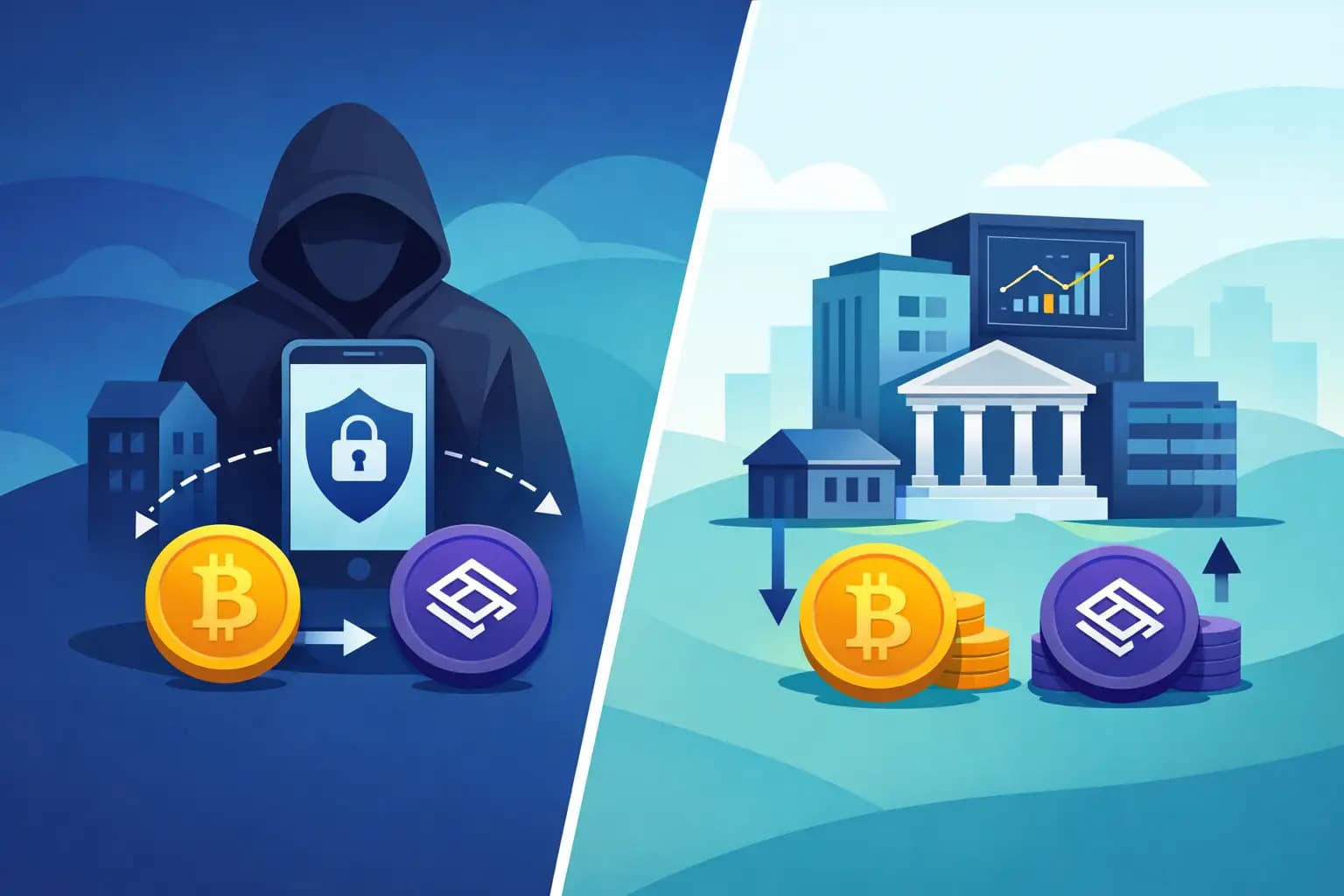
An exchange withdrawal can look like the simplest possible crypto action: select an asset, paste a wallet address, confirm, and wait. But the operational result is very specific. You are moving assets from an exchange-controlled balance to an address you control or another destination. A private send vs exchange withdrawal comparison starts with that distinction, because the two flows solve different problems before fees or confirmation times enter the picture.
If you need to move funds out of a trading venue, an exchange withdrawal is usually the direct path. If you need a privacy-focused transfer flow with clearer separation between source and destination activity, private send may be the better fit. Neither option is automatically right. The useful question is what you need the transaction to accomplish and what trade-offs you are willing to accept.
Private Send vs Exchange Withdrawal: The Core Difference
An exchange withdrawal is an outbound transaction initiated from a custodial platform. Until the withdrawal completes, the exchange controls the assets and signs the transaction. You provide a destination address and select a supported network, while the exchange applies its own withdrawal rules, minimums, fees, review processes, and processing schedule.
A private send flow is designed around transaction privacy rather than simply leaving a custodial account. Its purpose is to reduce unnecessary exposure of transfer relationships and provide a more discreet way to move assets. The exact mechanics depend on the service, asset, network, and routing options available, but the operating goal is different: privacy-aware movement rather than a standard exchange payout.
That distinction matters when you review a transaction later. With an exchange withdrawal, the originating exchange address, timing, and destination may be visible on-chain, while the exchange retains account-level records connected to the withdrawal request. A private send flow can reduce the direct public link between the starting and receiving wallets, but it does not make a transaction consequence-free, untraceable, or exempt from applicable laws.
When an Exchange Withdrawal Is the Practical Choice
Use an exchange withdrawal when the destination is straightforward and the source of funds needs to remain easy to document. It is the familiar route for moving purchased assets into self-custody, funding a known wallet, depositing into another platform, or paying a counterparty that has provided a verified receiving address.
The primary advantage is simplicity. Exchanges generally show the asset, network, withdrawal amount, fee, and status in one withdrawal screen. For users who are already verified on the platform, this can be faster than setting up a separate transaction flow. It also creates a clean operational record within the exchange account, which can be useful for bookkeeping, tax reporting, business reconciliation, or responding to a legitimate compliance request.
The trade-off is reduced control over the sending process. Exchange queues can delay withdrawals, especially during network congestion, maintenance, account security reviews, or large market moves. The platform may pause an asset or network without much notice. You also need to trust that you selected the correct chain. Sending USDT on TRON to an address expecting USDT on Ethereum is not a fee issue - it is a potential recovery problem.
Exchange withdrawals can also reveal more than users expect. A public blockchain transaction may show an identifiable exchange wallet sending funds to your destination. That information alone does not explain ownership or intent, but it can create an easily observed connection between addresses.
Best fit for an exchange withdrawal
An exchange withdrawal fits when speed from a custodial balance, direct delivery, and simple records matter more than transaction privacy. It is usually the cleanest option for routine transfers to your own verified wallet or a known service.
When a Private Send Flow Makes More Sense
A private send flow is relevant when public address linkage itself is a concern. Crypto users often reuse addresses across services, receive payments from multiple sources, or hold wallets that reveal trading activity, balances, and counterparties to anyone who checks the chain. Privacy is not only about hiding activity. It can be a practical way to limit unnecessary financial profiling.
For example, a freelancer paid in crypto may not want every client payment tied directly to a long-term personal wallet. A trader moving funds between strategies may want to avoid exposing a complete address map. A business managing operational wallets may want to reduce public visibility into treasury movements. These are privacy and security considerations, not a license to bypass sanctions, fraud controls, tax obligations, or platform rules.
Private send is not a substitute for secure wallet practices. You still need to verify the receiving address, use the correct network, protect your seed phrase, and understand the asset you are sending. Privacy-focused routing cannot recover assets sent to the wrong chain or reverse a completed blockchain transaction.
The other trade-off is that private send may involve a different fee structure and completion model than a basic withdrawal. The route can require time for processing, confirmations, or multiple operational steps. Before starting, check the amount you will send, the amount expected at the destination, the network, the service conditions, and the transaction status tools available.
Best fit for a private send
Choose private send when you want a privacy-focused transfer flow, do not need a direct exchange-to-destination link, and are comfortable reviewing the route and its timing. It is a deliberate operational choice, not an add-on to every transaction.
Compare Custody, Privacy, Cost, and Control
The fastest way to choose between these options is to compare the points that affect execution.
Custody: With an exchange withdrawal, funds begin under exchange custody. You request the withdrawal, but the platform processes it. In a private send flow, the custody model depends on the provider and the transaction design. Confirm whether the service operates as a non-custodial technology layer, how long funds are in transit, and what information is required to start.
Privacy: Exchange withdrawals usually create a visible direct path from an exchange-controlled address to the destination. Private send is built to reduce direct on-chain linkage. Privacy does not equal invisibility, and users should never rely on it to conceal unlawful activity.
Fees: Exchange fees are often fixed or set by the platform, regardless of current network conditions. Private-send pricing may reflect routing, liquidity, network fees, or the selected asset. Compare the final delivered amount instead of looking only at the headline fee.
Timing: A withdrawal can be quick when the exchange is processing normally, but its status depends on the platform as well as blockchain confirmations. A private send can involve additional routing time. For time-sensitive transfers, start with the completion expectation rather than assuming either route is instant.
Tracking: Exchange dashboards normally show a withdrawal request and transaction ID once broadcast. A well-designed private send flow should also provide clear status visibility from initiation through completion. Tracking every step does not mean exposing more of your financial activity than necessary. It means knowing where the transaction stands and when action is required.
A Better Decision Process Before You Send
Start with the destination. If you are moving assets to your own hardware wallet or a known deposit address, direct exchange withdrawal may be enough. Confirm the network first, then check whether the recipient requires a memo, tag, or specific deposit format.
Next, consider whether your source and destination addresses need to be publicly associated. If the answer is no, evaluate a private send flow based on its supported assets, expected delivery, costs, and transaction tracking. Use only services whose process and restrictions you understand.
Then assess counterparty and wallet risk. Before sending a meaningful amount, screening the destination wallet can help identify exposure patterns that may create operational or compliance concerns. This matters for OTC-style activity, new counterparties, business payments, and high-value transfers. Privacy and risk review are separate controls. One limits unnecessary visibility; the other helps you make a better decision before funds leave your wallet.
Finally, test where practical. For a new address, unfamiliar network, or large transfer, a small initial transaction can confirm that the wallet, chain, and receiving process work as expected. It adds one step, but it can prevent a much larger mistake.
Keep the Transaction Flow Purposeful
The right choice is rarely about finding the most private or the most familiar route. It is about matching the transaction flow to the job. Use an exchange withdrawal for direct custody transfers and clean platform records. Use private send when privacy-aware routing is a real requirement and you have reviewed the conditions.
2AML brings private-send flows, wallet AML checks, swaps, and TRON energy tools into one operational interface, so users can handle related tasks without switching between disconnected services. Whatever route you choose, verify the network, review the final amount, and keep control of the wallet that receives the funds.