
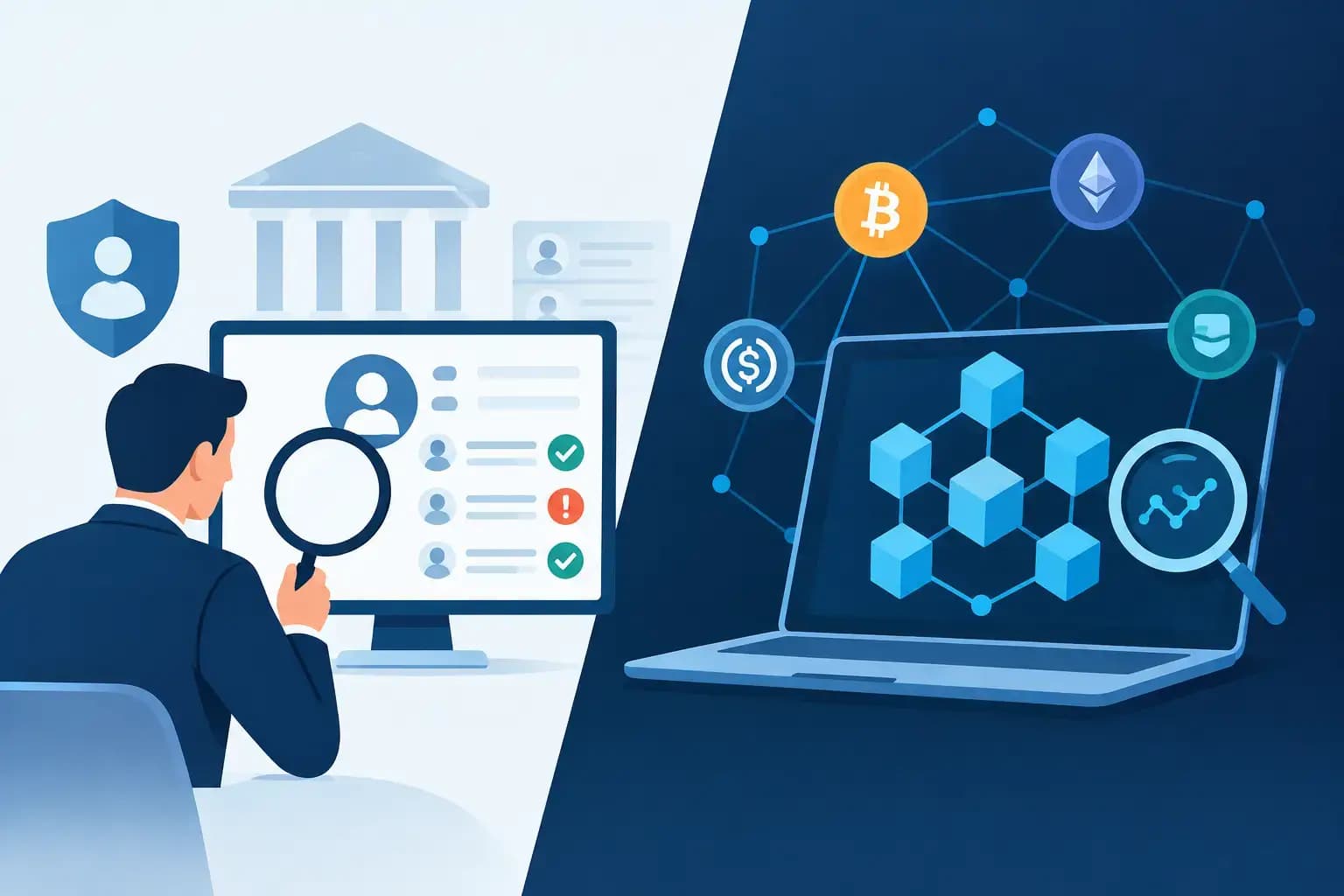
A wallet can look acceptable before a transfer and still become connected to risk afterward. That timing gap is the practical difference in AML screening versus blockchain monitoring. One helps you make a decision before interacting with an address. The other helps you see what happens across time, including changes that may affect an earlier decision.
For active crypto users, the distinction is not academic. It affects whether you pause a payment, document a counterparty review, investigate a flagged deposit, or continue operating with confidence. The right workflow depends on how often you move funds, how much exposure a transaction creates, and whether you need a one-time answer or ongoing visibility.
AML Screening Versus Blockchain Monitoring: The Core Difference
AML screening is a point-in-time risk check on a wallet address or transaction. A screening tool reviews available blockchain intelligence and assigns a risk result based on known or suspected exposure to categories such as scams, sanctions, darknet activity, stolen funds, mixers, high-risk services, or illicit marketplaces.
The output is designed to answer a focused operational question: what does this address look like right now? Before accepting a large OTC payment, sending funds to a new counterparty, or processing a customer withdrawal, that answer can help determine whether to proceed, request more context, or stop the transfer.
Blockchain monitoring is continuous or recurring observation of on-chain activity. Rather than producing a single check result, it tracks movements, counterparties, patterns, and new risk signals over time. Monitoring is built for situations where an address, wallet cluster, or transaction flow remains relevant after the first interaction.
A simple comparison makes the split clear:
| Function | AML screening | Blockchain monitoring | | --- | --- | --- | | Main purpose | Review risk at a specific moment | Detect risk changes across time | | Typical trigger | Before or after one transaction | Ongoing wallet or transaction activity | | Best for | One-off transfers and counterparty checks | Repeated payments, customer wallets, and business flows | | Output | A risk score or exposure result | Alerts, transaction history, and evolving behavioral context | | Operational question | “Should I interact with this address now?” | “Has this address or flow changed in a way that needs review?” |
Neither function replaces the other. Screening is a gate. Monitoring is a watchtower. If you only need to assess a single wallet before a transfer, continuous monitoring may add cost and process without much value. If you run recurring flows, rely on a one-time screen alone, and never revisit the relationship, you may miss what happens next.
When a One-Time AML Screen Is Enough
A wallet AML check is often the efficient option when the transaction is isolated, time-sensitive, and does not establish an ongoing relationship. Think of a trader receiving payment from a new address, a freelancer verifying a high-value client payment, or a user checking a destination wallet before moving assets.
The benefit is speed. You can review the available risk context without handing control of funds to a third party or adding a full monitoring program to a straightforward transaction. For users who stay self-custodied and operate across several wallets, this provides a practical layer of visibility before committing funds.
A one-time check also creates a useful record of what was known at the time of the decision. That matters if you later need to explain why a transfer was accepted, held, or declined. It does not prove that an address is safe, and it does not guarantee that future activity will remain low risk. It gives you an evidence-based view of current exposure.
The key limitation is timing. Blockchain attribution changes. New intelligence can identify a previously unknown scam cluster, sanctions exposure, or source of stolen funds after your screen is completed. A clean result means no meaningful risk was identified through the data available then, not that risk can never emerge.
When Blockchain Monitoring Makes More Sense
Monitoring becomes more valuable when transactions repeat, balances remain exposed, or your operations depend on knowing what happens after a payment clears. Small digital asset businesses, payment operators, OTC desks, marketplaces, and teams managing treasury wallets often fall into this category.
For example, a business may screen a customer deposit address before crediting an account. If the customer continues sending funds over weeks or months, ongoing monitoring can identify changes in the source of funds or transaction behavior. That creates a chance to review the relationship before risk compounds.
Monitoring can also reveal patterns that a single snapshot cannot show clearly. One inbound payment may appear unremarkable. A sequence of rapid hops through newly funded wallets, repeated interactions with known high-risk clusters, or sudden movement into sanctioned exposure may change the picture. Context accumulates with time.
That does not mean every wallet requires full surveillance. Monitoring should be proportional to the use case. A one-off personal swap has different operational needs than a wallet receiving dozens of third-party transfers each day. The more frequent the interaction and the higher the stakes, the stronger the case for ongoing review.
Risk Scores Need Context, Not Automatic Decisions
Whether you screen or monitor, a risk score is a signal, not a verdict. Address labels and exposure data are useful, but blockchain attribution is probabilistic and can change as investigators connect more activity. A high-risk result deserves attention, yet the appropriate response depends on the risk category, amount, transaction path, and your own policies.
Direct exposure to a sanctioned entity is not the same as distant indirect exposure several hops away. A wallet that once received dust from a compromised address is different from one that repeatedly sends funds to a known fraud cluster. Treating all flags as identical creates unnecessary friction and can lead to poor operational decisions.
A practical review process asks three questions: Is the exposure direct or indirect? Is the activity recent and repeated? Does the transaction behavior support the risk signal? These questions help separate a meaningful concern from a result that needs more investigation before action.
For regulated businesses, the final decision should also fit internal compliance procedures, applicable law, and any reporting obligations. A screening tool supports that process. It does not replace legal judgment, customer due diligence, or a documented risk program.
Build a Workflow Around the Moment of Risk
The cleanest approach is to place screening and monitoring where they reduce uncertainty without slowing every transaction. Start with wallet screening at decision points: before accepting a significant payment, before sending to an unfamiliar address, or when a transaction looks inconsistent with the expected activity.
Then add monitoring where exposure persists. This may include customer deposit addresses, operational wallets, treasury addresses, or counterparties that transact repeatedly. Define who receives alerts, what events trigger a review, and when activity should be paused. Alerts without an owner quickly become noise.
Keep the workflow simple enough to use under pressure. Record the address checked, the time of review, the result, the transaction reference, and the decision taken. For a small team, even a consistent lightweight process is more useful than an elaborate policy nobody follows.
Tools should support that operational rhythm. 2AML, for example, provides account-based wallet AML checks alongside transaction utilities, allowing users to review address risk without breaking into a separate compliance workflow. The value is not in adding another dashboard. It is in making the risk check available when a transfer decision is actually being made.
Use Both Only Where Both Add Value
AML screening is the right starting point for most individual wallet decisions because it is fast, targeted, and easy to apply before funds move. Blockchain monitoring earns its place when activity continues after that first check and the cost of missing a change is higher than the cost of watching the flow.
The goal is not to monitor everything or to treat every score as a stop signal. It is to keep control of each transaction: check the address when the decision is immediate, watch the relationship when the exposure continues, and act on signals with enough context to make the next move clear.